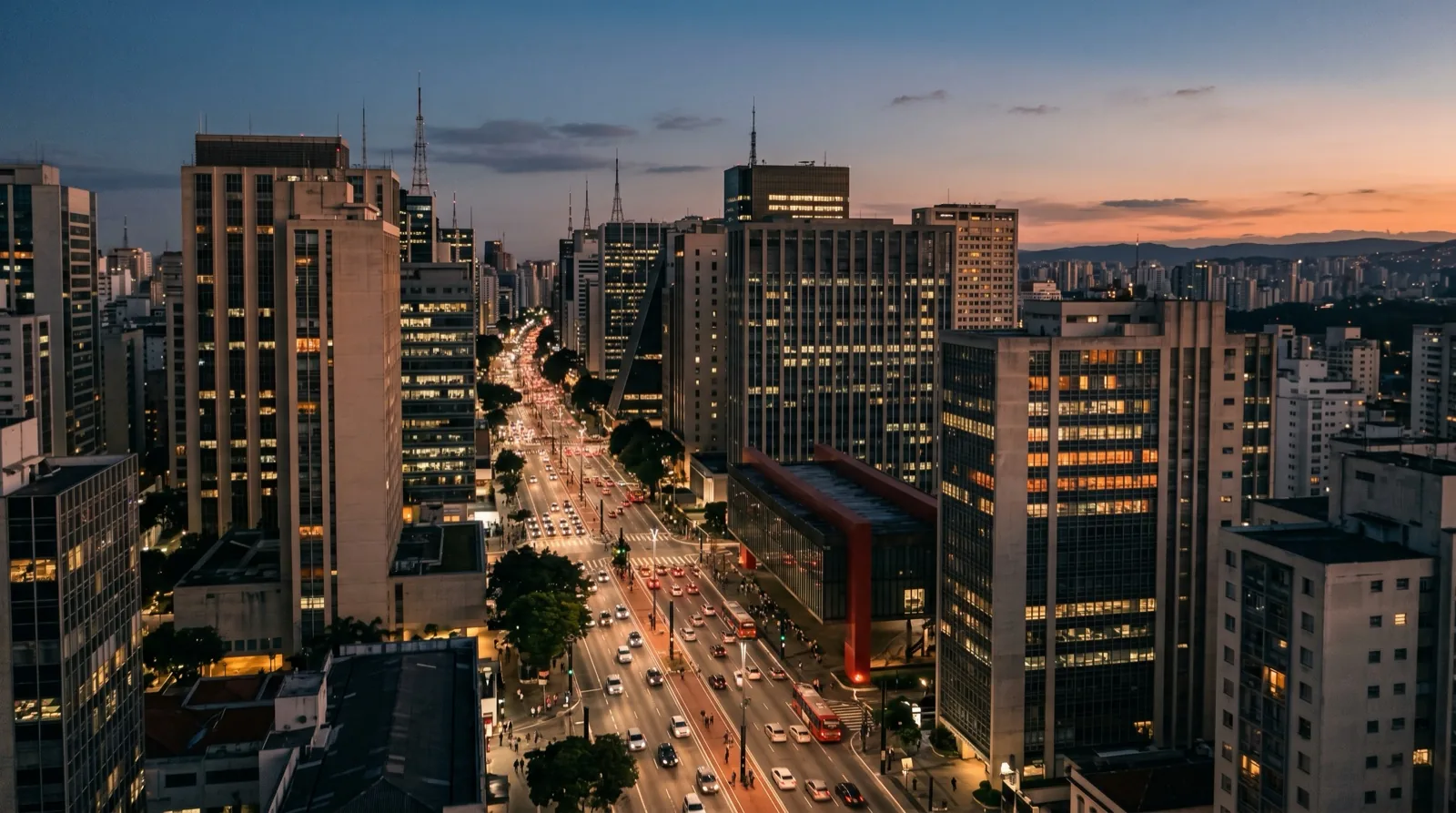
Brazil
Brazil runs the world's largest real-time payments rail, and a healthtech regulator no one in San Francisco can spell.
Latin America's largest economy ($2.17T USD, 9th globally), the world's #1 exporter of soybeans, beef, coffee, and sugar, host to the world's largest digital bank by user count (Nubank, 100M+ Brazilian customers), and the architect of PIX — Banco Central's real-time payments rail that now handles 3.4 billion+ transactions monthly with 80%+ of adult Brazilians active. Then the friction. NF-e since 2008, SPED for tax bookkeeping, LGPD with BRL R$50M maximum fines per infraction and an ANPD that has been actively issuing them since 2023, ANS for health-insurance, EUDR pressure on agribusiness exporters, a tax reform (EC 132/2023) replacing the entire indirect-tax stack (ICMS, IPI, PIS, COFINS, ISS) over 2026-2033, and a BRL that has moved from 4.90 to 6.20 to 5.30 against the USD without telegraphing direction. The Tier-1 Brazilian consultancies (Stefanini, TOTVS, CI&T, Globant Brasil, Accenture Brasil) open enterprise envelopes above USD $200,000 with delivery teams sized 8-25 FTE. The Brazilian mid-market — a Belo Horizonte SaaS at BRL R$40M ARR, a Caxias do Sul Tier-1 auto supplier, a São Paulo boutique law firm, a Cuiabá agribusiness exporter — cannot absorb that envelope. We close that gap with the six-service Areza stack, delivered in English with Brazilian-aware copy and inline pt-BR vocabulary references, configured for PIX integration patterns, LGPD compliance, NF-e issuance via a Brazilian CNPJ partner, and BRL/USD billing flexibility from day one.
Book a Brazil strategy call-
$2.17T USD
Brazil GDP 2024 (nominal)
Source: World Bank / IBGE 2024 — 9th-largest economy globally, largest in Latin America by a wide margin; ~5x Mexico, ~10x Chile
-
>3.4B / month · 80%+ adult adoption
PIX monthly transactions 2025
Source: Banco Central do Brasil 2025 — world's largest real-time payments rail by transaction count; >80% of adult Brazilians actively use PIX; 24/7/365 settlement
-
>100 million
Nubank Brazilian customers mid-2025
Source: Nubank Investor Relations 2025 — world's largest digital bank by user count; over half of adult Brazilian population; NYSE: NU, ~$60B+ market cap
-
~$166B USD
Brazil ag exports 2024
Source: MAPA / Comex Stat 2024 — world #1 in soybean, beef, coffee, sugar, orange juice; world #2 in corn; largest agricultural export economy globally
-
~1,600+ active fintechs
Brazil fintech footprint 2025
Source: Distrito Fintech Report 2025 — largest fintech ecosystem in Latin America; ~50-55% of LATAM fintech revenue concentrated in Brazilian companies
-
+27% FX-neutral YoY
Mercado Livre Brasil GMV growth 2025
Source: Business Wire Feb 2026 — Brazil ~55% of MELI group metrics; Mercado Pago group net revenue $12.6B (+46% YoY) in 2025; 78M monthly active users group-wide
-
~BRL R$205B (~$40B USD)
Brazil ecommerce 2024
Source: ABComm 2024 / eMarketer LATAM 2025 — growing 12-15% YoY; PIX ~30-35% of checkout payments mid-2025 and rising
-
BRL R$50M or 2% of Brazilian revenue
LGPD maximum fines per infraction
Source: ANPD (Autoridade Nacional de Proteção de Dados) — administering LGPD (Law 13.709/2018) since 2020; actively issuing fines and guidance since 2023; ANPD signed cooperation agreements with EU EDPB and CNIL
Why Brazil
Four facts about Brazil that change what AI growth has to do.
PIX is not a payment method. It is national digital infrastructure. Banco Central launched PIX in November 2020. Five years later, 80%+ of adult Brazilians use it actively, monthly transactions are above 3.4 billion, and PIX has displaced 50-70% of boleto bancário B2B and B2C volume in the same period.
For ecommerce checkout, PIX is now the second-largest payment method behind credit cards and ahead of boleto. For B2B invoicing, PIX has compressed settlement from D+1 (boleto) to instant. For consumer fintech, PIX integration is buy-or-bleed — foreign neobanks (N26, Revolut) that tried Brazil without PIX integration retreated, and the same pattern repeats every quarter with US-only fintechs entering the market and discovering on day 60 that their Stripe-only checkout is functionally unshippable.
AI search content has to surface PIX-native flows as machine-readable schema, voice agents have to handle PIX-status questions in a register Brazilians actually use, and workflow ops have to reconcile PIX inflows against NF-e issuance.
LGPD is the most-enforced data-protection regime in Latin America. ANPD took its enforcement teeth in 2023 and has not let go since. Maximum fines: BRL R$50M per infraction or 2% of Brazilian revenue.
ANPD has published formal opinions on AI training data, biometric processing, and cross-border transfers; signed cooperation agreements with the EU EDPB and CNIL; and ranks health data + financial data as priority enforcement areas. Any vendor selling AI capability into Brazil without a documented sub-processor list, contractual no-training-on-customer-data terms, an explicit cross-border-transfer treatment in the privacy notice, and ideally an AWS São Paulo region or AWS Frankfurt fallback configuration loses procurement review at the second meeting.
Our default LGPD posture: all-denied Consent Mode v2, DPAs signed at engagement start, no training on customer data, sub-processor list published.
Five tech poles, five different patterns. São Paulo is corporate Brazil — Faria Lima banking, Vila Olímpia + Itaim Bibi scaleups, Pinheiros design + product. Rio de Janeiro is Petrobras + Vale + government-relations + film + tourism — smaller tech footprint but bigger than its press.
Belo Horizonte (MG) is the engineering corridor anchored by Hotmart and the Campinas-BH axis. Florianópolis (SC) is the bootstrapped-SaaS pole — RD Station, Senior Sistemas, a population under 500K punching massively above its weight.
Curitiba (PR), Porto Alegre (RS), Recife (PE), and Brasília round out the regional clusters. One English-language site does not serve all five. We ship per-cluster GTM motion — São Paulo Faria Lima copy is different from Caxias do Sul auto-supplier copy, which is different from Cuiabá agribusiness copy.
Brazilian buyers search in pt-BR and read in English fluently — but never the other way. A São Paulo Series B SaaS CMO googles `agência de IA São Paulo` or `growth SaaS Brasil` and lands on Areza's English page with carefully placed pt-BR vocabulary references. Switches to English content without friction.
The reverse — a Spanish-only buyer from Mexico or Argentina reading machine-translated Portuguese — actively reads as foreign and condescending. We do not author Portuguese content for Brazil.
We author English content with Brazilian-aware copy, inline pt-BR SERP-capture phrases (`Brazilian buyers searching agência de IA São Paulo land here`), and a Spanish secondary track for LATAM-neutral readers. Mexican, Argentinian, Colombian buyers visiting brazil-relevant pages get the Spanish version. Brazilian buyers get the English version. No machine-translated pt-BR.
Numbers, not slogans
What the data actually says about Brazilian digital buying.
Brazil is the largest LATAM startup ecosystem by aggregate VC raised, despite Mexico's quarterly overtake in Q2 2025. Brazilian startups raised roughly $1.8B-2.1B in 2024 and tracked similarly through 2025, with SaaS and fintech absorbing the largest shares.
Loft, CloudWalk, QuintoAndar, Hotmart, VTEX, Méliuz, Conta Azul, RD Station, Pipefy, and Conexa Saúde anchor the Brazilian SaaS cluster at scale; Nubank, Inter, C6, Stone, PagBank, PicPay, Mercado Pago Brasil, and a fintech long-tail anchor the fintech cluster.
The implication for a vendor selling AI search citation, voice agents, and workflow ops: the buyer expects PIX + NF-e + LGPD baseline operational, expects bilingual English + pt-BR delivery cadence, and expects the vendor to know that Inter is not Nubank and CloudWalk is not Stone.
Brazilian ecommerce is roughly Mercado Livre Brasil ~25-30% / Magazine Luiza ~15% / Amazon Brazil ~10% / Americanas ~6-8% / Casas Bahia ~5-7% / Shopee ~5-8% / long tail ~35-40%. PIX is now ~30-35% of online checkout payments and rising. The Brazilian DTC stack runs on VTEX, Shopify Brasil, Nuvemshop (Tiendanube Brasil), Bling, and direct Mercado Livre storefronts.
TikTok Shop Brasil scaled meaningfully through 2024-2025. A vendor selling AI-search citation infrastructure or voice agents into Brazilian DTC needs to understand that the customer journey routes through MELI listings, MELI Ads, Mercado Pago checkout, Magalu Super App, and increasingly TikTok Shop affiliate — not just owned VTEX or Shopify storefronts.
Pricing transparency is a Brazilian mid-market signal in a way it is not in Faria Lima corporate procurement. Published rate cards from Brazilian software shops show BRL R$200-400/hour for boutique agencies and R$350-700/hour for established mid-market shops — roughly $38-75/hour boutique and $66-132/hour mid-market USD-equivalent.
Brazilian family businesses appreciate a fixed BRL-equivalent envelope they can show the patriarch on one page. The Tier-1 `entre em contato para preço` posture reads as `this will be expensive and political` outside the top 200 Brazilian companies. We publish prices in BRL with USD reference and ship proposals as fixed-fee envelopes, not time-and-materials.
On AI search: ChatGPT, Perplexity, and Google AI Overviews answer pt-BR-language Brazilian queries from a mix of pt-BR and English source content and render in pt-BR. A São Paulo procurement manager researching `agência de IA São Paulo` is plausibly served a Perplexity answer that cites pt-BR consultancy directories, English-language SaaS pages, and a sprinkle of LATAM-Spanish content from Mexican or Spanish agencies.
The competing surface includes Stefanini's case studies, TOTVS press releases, CI&T's NYSE-listed-issuer SEO authority, and Globant Brasil's enterprise content. Content has to exist in English with proper schema, inline pt-BR vocabulary references, and Brazil-specific anchors (PIX, NF-e, LGPD, ANS, ANVISA, COAF, MAPA, EMBRAPA, EUDR, EC 132/2023) to compete for that citation.
What we do differently
An SME-priced six-service stack, in English with Brazilian-aware copy, under PIX + LGPD + NF-e.
Areza is purpose-built for the Brazilian mid-market that the Tier-1 Brazilian consultancies cannot serve at price. Foundation starts at BRL R$28,000 (~$5,300 USD) for a 2-4 week conversion-first build in English with Brazilian-aware copy and pt-BR SERP references. AI Search retainer starts at BRL R$4,500/month (~$850 USD).
A typical Brazilian SME engagement combines Foundation + AI Search + Knowledge Bot, landing at BRL R$50,000-80,000 setup plus BRL R$10,000-16,000/month for the first six months. Voice Agent in pt-BR-capable English (Brazilian operators expect to be able to switch to English at any point) goes live in 14 days. None of that requires a Stefanini-sized RFP cycle or a Globant Brasil-style steering committee.
The compliance map is published as part of the engagement, not added later. LGPD has been in force since 2020 with penalties since 2021; ANPD is materially more active than its Mexican counterpart SABG. We configure Consent Mode v2 with all-denied defaults, set AWS São Paulo or AWS Frankfurt data residency on request, sign DPAs at engagement start, and include explicit no-training-on-customer-data terms.
For fintech clients under CVM + Banco Central + COAF supervision, we add the licensing-line compliance items at scoping rather than as a surprise. For SME clients we invoice via a Brazil-domiciled CNPJ partner with the correct NF-e issuance, SPED-tracking, and 2026-2033 tax-reform-transition-aware contract templates so AP teams do not route the invoice to `internacional` purgatory.
We ship Brazil-aware, not LATAM-generic. The English surfaces use Brazilian-aware copy — references to PIX, NF-e, LGPD, ANS, ANVISA, COAF, MAPA, EMBRAPA, BRL/USD pricing flexibility, EC 132/2023 tax reform — with inline pt-BR SERP-capture phrases (`Brazilian buyers known locally as the agência de IA option`).
Voice Agent handles English-default operator conversations with pt-BR phrase recognition. Knowledge Bot is trained on Brazilian regulator vocabulary. The Spanish version of every page serves the LATAM-neutral reader (Mexican, Argentinian, Colombian, Chilean buyer curious about Brazilian operations) without pretending it is for Brazilians.
Brazil-specific timezone coverage is built in. The team operates with overlap to BRT (UTC-3) — the dominant working hours for São Paulo, Rio, Belo Horizonte, Florianópolis, and the US-East-coast buyers most Brazilian B2B clients answer to.
That means same-business-day async response during the Brazilian workday rather than the 4-hour Europe-Brazil lag that EU-only agencies impose during BRT business hours. Voice Agent operates with BRT + EST + CST overlap so US-buyer inbound calls during California or Texas business hours route correctly and Brazilian operator calls during BRT business hours route correctly without rotation friction.
Niches
Where Areza fits in Brazil, by niche.
Each niche page goes deep on the local operator pattern — named tools, sourced ROI, regulatory specifics, and the Areza service mapping that works inside that vertical.
-
B2B SaaS (São Paulo + Belo Horizonte + Florianópolis)
São Paulo, Belo Horizonte, and Florianópolis scaleups raising USD or BRL rounds, English-default at the founder + senior-engineer level, pt-BR-default at sales and support. The cluster includes VTEX (NASDAQ), TOTVS (B3), Loft, CloudWalk, QuintoAndar, Hotmart, Méliuz, Conta Azul, RD Station, Pipefy. The wedge is bilingual EN-pt-BR AI-search citation infrastructure while the GTM team scales into LATAM and the US.
Fit for Series A-C Brazilian SaaS scaleups, 30-300 FTE, dual-locale pt-BR + English buyer base.
Read the deep-dive -
Ecommerce + DTC
Brazilian ecommerce splits roughly Mercado Livre Brasil ~25-30% / Magazine Luiza ~15% / Amazon Brazil ~10% / Shopee ~5-8% / long tail ~35-40%, with MELI Brazil growing GMV +27% FX-neutral in 2025. The brand tail runs on VTEX, Shopify Brasil, Nuvemshop, and direct MELI storefronts. The wedge is AI-search citation for `melhor marca de [categoria] Brasil` queries plus Voice Agent for post-purchase support and PIX-related dispute handling.
Fit for Brazilian DTC brands BRL R$10M-500M ARR; Shopify, VTEX, Nuvemshop, or MELI Plus stacks.
Read the deep-dive -
Fintech (São Paulo + Rio)
Brazil is LATAM's largest fintech market with ~1,600+ active fintechs and the world's largest digital bank by user count (Nubank, 100M+ Brazilian customers). PIX as central-bank infrastructure, LGPD enforced harder than anywhere else in LATAM, CVM/Banco Central/COAF/CONDUSEF-equivalent supervision layered on top. The wedge is AI-search citation for `melhor neobanco Brasil` and `fintech inteligência artificial` queries plus PIX-aware voice agents and COAF-aware workflow ops.
Fit for São Paulo or Rio fintech scaleups, 20-400 FTE, under Banco Central + CVM + COAF supervision.
Read the deep-dive -
Agribusiness (Mato Grosso + Goiás + Paraná + RS)
Brazil is world #1 in soybean, beef, coffee, sugar, and orange juice exports; world #2 in corn. ~$166B in 2024 ag exports. Solinftec, Strider, Agrosmart, AgriHub anchor Brazilian agtech; EMBRAPA is a world-class agricultural research org with ~9,000 researchers. EUDR + EU CSDDD pressure makes traceability + sustainability AI strategic, not optional. The wedge is AI-search citation + Workflow Ops sized for Brazilian-agribusiness mid-market budgets, configured for MAPA + EMBRAPA + EUDR documentation.
Fit for 50-1000 FTE agribusiness exporters + cooperatives in Mato Grosso, Goiás, Paraná, Rio Grande do Sul, Minas Gerais, MATOPIBA.
Read the deep-dive -
Manufacturing (São Paulo + Minas Gerais + RS)
Brazilian manufacturing is ~11% of GDP direct + ~14% adjacent industry. Embraer (world #3 commercial aircraft), Vale (world's largest iron ore), Gerdau (steel), Marcopolo (buses), JBS (world's largest meat processor), WEG (world's #1 industrial motors). ABIMAQ industry association anchors the ecosystem. São Paulo + Minas Gerais + Rio Grande do Sul dominate. The wedge is AI Search + Workflow Ops sized for Brazilian-industrial mid-market budgets and configured for IATF 16949, NF-e, SPED, and EUDR/CSDDD documentation in English for US/EU buyers.
Fit for 100-1500 FTE industrial SMEs in São Paulo, ABC Paulista, RS, MG, PR auto + aerospace + electronics + machinery supply chains.
Read the deep-dive -
Professional services
Brazilian professional services — escritórios de advocacia, contadores, consultorias tributárias — operate under NF-e, SPED, LGPD, OAB rules, and the 2023-2033 tax reform transition. Top tier includes Mattos Filho, Pinheiro Neto, Tozzini Freire, Demarest, Veirano, BMA. Big 4 (Deloitte, PwC, EY, KPMG Brazil) dominate the tax practice. The SME wedge is AI-search citation + Knowledge Bot for client FAQ in English with pt-BR SERP references, plus Foundation pages tuned for `escritório boutique LGPD Brasil` and `consultoria tributária reforma` long-tail queries.
Fit for 5-100 FTE boutique law firms + Big-4-adjacent consultancies under OAB + CFC + COAF + sectoral regulators.
Read the deep-dive -
Healthtech (São Paulo + Belo Horizonte)
Brazil's dual-track healthcare system (SUS public + ANS-regulated private with ~51M beneficiaries) generated ~$205B in 2024 health spend. Rede D'Or, Hapvida + NotreDame, Amil, DASA, Fleury, Hospital Albert Einstein anchor private health. Memed (e-prescriptions, 500M+ cumulative), Conexa Saúde (telemedicine), Lia.docs (medical AI). ANS + ANVISA + CFM + LGPD-as-health-priority supervision. The wedge is AI-search citation + voice-agent for patient intake + workflow ops on ANS + ANVISA documentation, with LGPD sensitive-data treatment configured from day one.
Fit for 50-500 FTE private hospital networks + healthtech scaleups + clinic groups under ANS + ANVISA + CFM + LGPD-sensitive supervision.
Read the deep-dive




Cultural + regulatory
How Brazilian operators actually buy.
LGPD is materially more enforced than LFPDPPP in Mexico or LFPD in Argentina. ANPD took its enforcement teeth in 2023 and has not let go since. Maximum fines: BRL R$50M per infraction or 2% of Brazilian revenue. ANPD has published formal opinions on AI training data, biometric processing, and cross-border transfers; flagged health data and financial data as priority enforcement areas; and signed cooperation agreements with the EU EDPB and CNIL.
Brazilian procurement teams now routinely ask for documented sub-processor lists, contractual no-training-on-customer-data clauses, and AWS São Paulo or AWS Frankfurt residency options. We configure all of that at engagement start.
NF-e since 2008, SPED since 2009, tax reform 2026-2033. Brazil was one of the world's first countries to mandate national electronic invoicing (NF-e since 2008, issued via SEFAZ state-level platforms with cross-state validation). SPED — Sistema Público de Escrituração Digital — has handled unified digital accounting since 2009.
The 2023 tax reform (constitutional amendment EC 132/2023) is now replacing the indirect-tax stack (ICMS, IPI, PIS, COFINS, ISS) with a dual VAT-like system (IBS + CBS) phased in over 2026-2033. Every B2B SaaS / fintech / agency selling into Brazil is repricing and restructuring contracts through this transition. We work with Brazilian CNPJ partners on NF-e issuance and tax-reform-aware contract templates.
PIX is mandatory infrastructure, not a feature. Banco Central regulates PIX participants directly; 80%+ of adult Brazilians are active; 3.4B+ monthly transactions; world's largest real-time payments rail by transaction count.
For consumer fintech, ecommerce, B2B SaaS billing, and most professional-services billing, PIX is now operational substrate. Foreign vendors that skip PIX integration discover on day 60 that their Stripe-only checkout is functionally unshippable to mid-market Brazilian buyers. We surface PIX as a first-class payment-method schema on Foundation pages.
Brazilian Portuguese register matters — but we do not ship Portuguese content. B2B Brazil defaults to formal `você` — closer to a Mexican `usted` than to Argentinian `tú/vos`. For deals at C-level or with family-owned conglomerates, `o senhor / a senhora` registers on first contact; switches to `você` within one or two exchanges.
Anglicism load reads natural in product-led founder Slack; jarring in regulator-facing communication and traditional-industry boardrooms. Our published strategy: English (primary) + Spanish (secondary).
Brazilian buyers searching `agência de IA São Paulo` land on English content with inline pt-BR vocabulary references for SERP capture (`Brazilian operators who know us as the agência de IA option`). Spanish content serves LATAM-neutral readers from Mexico, Argentina, Colombia, Chile.
Decision cycles: faster than Mexico, slower than US. SME cycles run 45-90 days, mid-market 60-120 days, enterprise 4-8 months under Banco Central, CVM, ANS, or ANVISA supervision. Brazilian SMEs decide faster than Mexican SMEs on first commitment because the family-business patriarch + US-trained next-gen operator combination is more common, but the contract-language phase is similar — every clause gets re-read in Portuguese for the family-business lawyer even if the contract is in English.
We start with Foundation engagements so the buyer sees output before committing to a longer arc, and we structure retainers in BRL with a USD reference rate so a 20% real swing does not break the quarterly P&L.
Examples
How operators in Brazil actually use Areza.
-
São Paulo Series B SaaS scaling into LATAM and the US
A 120-person São Paulo Faria Lima SaaS scaleup raising a USD Series B needed to compete in both pt-BR-language `software [categoria] Brasil` queries and English-language `[category] platform for SMEs` US queries while a six-person GTM team scaled to twelve. Foundation refresh in 4 weeks — English site with inline pt-BR vocabulary references (`Brazilian operators who know us as the plataforma SaaS option`), `en` and `es` as the two shipped locales, pt-BR SERP-capture phrases woven into copy. Added AI Search retainer targeting fourteen cluster queries split across pt-BR-SERP-source and English. Voice Agent for inbound demos in English with pt-BR phrase recognition. Three months in: ChatGPT and Perplexity citations on 9 of 14 target queries, 31% of demo bookings AI-search-referred, GTM able to defer hiring a third SDR by one quarter. Voice Agent handled 67% of inbound demo qualification end-to-end. The Brazilian founder reported that two large Mexican prospects discovered the platform through the Spanish version of the same page — a happy accident that confirmed the EN + ES strategy serves both Brazilian operators and LATAM-neutral readers without authoring Portuguese.
-
Caxias do Sul Tier-1 auto-parts supplier opening an EUDR-compliant line
A 480-person Rio Grande do Sul auto-parts SME (IATF 16949 certified, supplying to Stellantis Goiana and GM Gravataí) opened a new line in 2025 to absorb capacity moved from a Chinese supplier under EU CSDDD + EUDR-adjacent pressure. The EU buyer demanded an English-language supplier portal with PPAP documentation and quality records exposed as structured data, plus pt-BR operator surfaces for the Brazilian plant. Foundation built a bilingual capability site with IATF + ISO + ABIMAQ certifications surfaced as schema. AI Search targeted `fornecedor [componente] EUDR Brasil` and `Tier-1 [component] supplier Brazil nearshoring` long-tail queries that had previously sent traffic to Stefanini-tier directories. Workflow Ops automated NF-e issuance with the correct codes for cross-border invoicing and EU-buyer-portal submissions for Stellantis Covisint and GM Supplier Network. Two new RFQ pipelines opened in 90 days from EU buyers who found the company via Perplexity citations for niche capability queries. The patriarch signed off after seeing the first three NF-e invoices clear without finance pushback and the EUDR traceability documents accepted by the German OEM's procurement team.
-
São Paulo fintech scaleup under Banco Central + CVM + COAF
A 180-person São Paulo consumer-credit fintech regulated under Banco Central + CVM Resolution 88 (crowdfunding) + COAF AML rules needed to compete against Nubank and Inter on Brazilian acquisition queries while shipping every consumer surface LGPD-compliant and ANS-irrelevant (no health products). Foundation rewrote the product pages in English with inline pt-BR vocabulary references (`Brazilian operators known locally as the fintech inteligência artificial option`), and shipped a separate Spanish version for LATAM-neutral readers. AI Search targeted `melhor cartão de crédito sem comprovação Brasil`, `crédito PJ PIX integração`, and `fintech IA Brasil` clusters. Knowledge Bot trained on Banco Central's open-banking rules, CVM Resolution 88 + 175 + 197 prospectus requirements, COAF reporting workflows, and LGPD privacy notice templates with strict no-advice disclaimers and human handoff at any wealth-suitability touch. Three months in: ChatGPT citations on 6 of 9 product-page clusters, 38% reduction in support tickets after Knowledge Bot deployment, and a Banco Central supervision pass with zero findings on consumer-surface transparency.
Let's build the foundation your business actually deserves.
PAA
People also ask
-
How much does an AI agency cost in Brazil?
Brazilian AI agency rates run BRL R$200-400/hour at boutiques and R$350-700/hour at mid-market shops — roughly USD $38-75/hr and $66-132/hr at 5.3 BRL/USD. Foundation projects start at USD $2,400. Tier-1 envelopes from Stefanini, TOTVS, or CI&T open above USD $200,000-400,000 for greenfield AI work with delivery teams sized 6-25 FTE.
-
How long does AI implementation take for a Brazilian SME?
Foundation builds ship in 14-21 days; pt-BR or English Voice Agent in 14 days; LGPD-aligned Knowledge Bot in 21-30 days. Brazilian SME procurement runs 30-60 days when the decision-maker is the founder; mid-market 60-120 days under family-business committees; regulated enterprise 4-8 months under Banco Central, CVM, or ANS supervision plus 2026-2033 tax-reform repricing.
-
How does LGPD apply to AI deployments in Brazil?
LGPD (Law 13.709/2018) is administered by ANPD and carries fines of BRL R$50M per infraction or 2% of Brazilian revenue. ANPD has actively published opinions on AI training data, biometric processing, and cross-border transfers since 2023. Standard contractual clauses (2024) are required for non-adequacy destinations. ANPD has signed cooperation agreements with the EU EDPB and CNIL.
-
What AI tools do Brazilian fintech companies use?
Brazilian fintech AI is led by Nubank Cognitech (~100M+ customers, world's largest digital bank), Itaú AI Lab (credit + fraud), Bradesco BIA (billions of customer interactions since 2017), and CloudWalk's Jim AI assistant. The default stack combines AWS Bedrock + Azure OpenAI + open Llama models, with PIX integration via Banco Central APIs and NF-e via state SEFAZ platforms.
-
Should I hire an AI agency in Brazil or nearshore from another LATAM market?
Brazilian engineering talent is world-class (CI&T NYSE-listed, Stefanini 30K employees) and CNPJ invoicing through a Brazilian partner is essentially mandatory above USD $200K annual spend. PIX and NF-e integration require a Brazil-domiciled partner. For pure engineering at scale, Argentina and Mexico run cheaper but the Portuguese-language buyer expects pt-BR copy, not Spanish.
Frequently asked
-
Why does Areza ship English + Spanish for Brazil instead of Portuguese?
Two practical reasons and one strategic one. Practical: the eight site locales (en, ru, lt, de, fr, es, pl, it) are frozen, and pt is not among them. Adding pt-BR as a ninth locale would mean translating every page on areza.digital, hiring native pt-BR copywriters, and maintaining content parity across all six services, all blog posts, and all market pages — a multi-month commitment we deferred. Strategic: Brazilian B2B buyers above Series A are bilingual at the senior level, read English fluently, and actively prefer English content over machine-translated pt-BR (which reads as foreign and condescending). We author English with Brazilian-aware copy and inline pt-BR vocabulary references (`Brazilian operators who know us as the agência de IA option`) for SERP capture on pt-BR queries. Spanish secondary serves the LATAM-neutral reader — a Mexican CMO researching Brazilian operators, an Argentinian fintech founder mapping the cross-border opportunity, a Colombian agency comparing Brazilian agency rates. Brazilian operators get English. LATAM-neutral readers get Spanish. No machine-translated pt-BR.
-
Can you issue NF-e invoices? What about SPED and the 2023 tax reform?
Yes. For Brazilian clients we invoice via a Brazil-domiciled CNPJ partner with NF-e issuance through the relevant SEFAZ state platform, SPED tax-bookkeeping integration, and tax-reform-transition-aware contract templates that reference the EC 132/2023 transition (2026-2033 phased rollout of IBS + CBS replacing ICMS + IPI + PIS + COFINS + ISS). Non-compliance with NF-e or SPED requirements carries material AP friction — invoices route to `internacional` purgatory inside the buyer's AP team — so this is not a corner we cut. Below the BRL R$50K annual-spend threshold we sometimes invoice via international wire in USD with a clear note that the buyer should request an NF-e mirror from their AP team; above it, NF-e through CNPJ partner is the default. We work with Brazilian counsel of the client's choice on tax-reform-aware contract language.
-
How does PIX integration affect Foundation and Voice Agent engagements?
PIX is buy-or-bleed at the Brazilian consumer-fintech and ecommerce checkout, the same way Bizum is in Spain. Foundation engagements publish PIX availability on product pages in machine-readable PaymentMethod schema so `pago instantâneo Brasil` and `PIX integração` queries find the client in ChatGPT, Perplexity, and Google AI Overviews. Voice Agent handles PIX-status questions natively in English with pt-BR phrase recognition — `did my PIX go through`, `PIX caiu`, `comprovante de PIX`. Technical PIX-API integration (via Banco Central's DICT, the chave-PIX directory) sits inside the client's own engineering team; Areza handles the marketing-site surface, the AI-search citation lever, and the consumer-protection-compliant copy under LGPD + Banco Central transparency rules.
-
How do you handle São Paulo vs Belo Horizonte vs Florianópolis vs Rio differently?
Each pole buys differently and we ship per-cluster GTM motion. São Paulo (Faria Lima + Itaim Bibi + Vila Olímpia + Pinheiros) is corporate Brazil — slower committees, larger tickets, highest English-fluency at senior level, highest ChatGPT and Perplexity penetration, English-default at every layer. Belo Horizonte (Funcionários + Savassi + BH-Campinas axis) is engineering-pole — Hotmart HQ, CI&T Campinas-BH axis, faster than São Paulo on first decision. Florianópolis (Itacorubi + Centro) is the bootstrapped-SaaS pole — RD Station, Senior Sistemas, English-default at founder level, fastest cycles. Rio de Janeiro is Petrobras + Vale + film + tourism + government-relations — smaller tech footprint but still significant in oil + gas + media AI work. Sector events differ per pole too — Web Summit Rio and RD Summit (Florianópolis) anchor the SaaS calendar; Brasil at Silicon Valley (San Francisco) is where São Paulo founders meet US investors.
-
Do you price in BRL or USD?
BRL with a USD reference rate by default for Brazilian clients; USD for cross-border engagements (Brazilian fintech selling into the US, Brazilian agribusiness exporting to EU, US-headquartered fintech expanding into Brazil). Foundation starts at BRL R$28,000 (~$5,300 USD), AI Search retainer at BRL R$4,500/month (~$850 USD), Voice Agent from BRL R$12,500/month (~$2,360 USD), Knowledge Bot from BRL R$3,000/month (~$570 USD). A typical Brazilian SME engagement combines Foundation + AI Search + Knowledge Bot at BRL R$50,000-80,000 setup plus BRL R$10,000-16,000/month for the first six months. Mid-market scaleups with Growth Stack engagements land BRL R$90,000-220,000 setup plus BRL R$15,000-32,000/month. Pricing is published. Brazilian family businesses expect it, and `entre em contato para preço` reads as a flag outside the top 200 companies. We absorb BRL volatility inside the retainer envelope — USD/BRL has moved 20%+ in single years and we will not pass that to the client mid-engagement.
-
How fast can a Voice Agent in English with pt-BR phrase recognition go live?
14 days from kick-off for the standard configuration: inbound handling, qualification, calendar booking, CRM hand-off, and outbound reminders in English with pt-BR phrase recognition (so `did my PIX go through`, `PIX caiu`, `boleto venceu` all resolve correctly). Add a week for English-default with pt-BR-routing (the standard for Brazilian-operator-facing flows). Add two weeks for sector-specific compliance scripts — COAF AML routing for fintech, ANS triage rules for healthtech, MAPA/EUDR documentation for agribusiness exporters. The 14-day baseline assumes you can provide your call recordings, FAQs, and the names of the three buyer questions you hear most often. Voice Agent operates with BRT (UTC-3), EST (UTC-5), and CST (UTC-6) overlap built in, so US-buyer inbound calls during California or Texas business hours route correctly without an 8-hour Europe-Brazil lag.
-
What about LGPD international-transfer treatment for a Vilnius-based agency?
LGPD requires explicit international-transfer treatment in the privacy notice for any vendor outside Brazil, and ANPD published standard contractual clauses (SCCs) in 2024 that closely mirror the EU GDPR SCCs. Areza is based in Lithuania, a full EU GDPR jurisdiction with an adequacy-equivalent stance from ANPD's perspective. Practical effect: cross-border transfer Lithuania → Brazil falls under EU-Brazil adequacy logic, and ANPD's SCCs are signed at engagement start. AWS São Paulo region is available for clients requiring data residency inside Brazil; AWS Frankfurt fallback for European-customer flows. Documented sub-processor list and contractual no-training-on-customer-data clauses are configured from day one. Brazilian Series B+ procurement teams accept Lithuania-resident or EU-resident vendors more easily than US-resident ones because the EU framework is materially closer to LGPD than CCPA or state-by-state US privacy law.
-
How does Areza differ from Stefanini, TOTVS, CI&T, or Globant Brasil?
Stefanini (Brazilian SI giant, ~30K employees), TOTVS (Brazil's largest enterprise software house, B3-listed), CI&T (NYSE: CINT, ~6.5K staff), and Globant Brasil open enterprise envelopes above USD $200,000-400,000 with delivery teams sized 6-25 FTE — they are excellent for Itaú, Bradesco, Petrobras, Vale, Ambev, and B3-listed-issuer procurement. Brazilian boutiques (Daitan, Eleflow, ilegra, Avenue Code, iCEV, BRy) compete on price for mid-market projects and are strong on pt-BR delivery. Areza is purpose-built for the AI-search + agentic-automation + voice layer — the parts of B2B growth that are remote-first, systems-engineering-shaped, configured for LGPD + NF-e + PIX by default, and priced for the mid-market SMEs that the Tier-1 envelope filters out. The honest split: hire Stefanini or TOTVS for Bradesco-scale transformation, a Brazilian boutique for one-off pt-BR content work, and bring Areza in for the AI Search, Voice Agent, Workflow Ops, and Knowledge Bot work where the systems-first approach compounds and the SME-priced six-service stack closes the gap that USD $200K+ Tier-1 quotes cannot touch.
Where to start
Services that fit Brazil.
- AI Search
The single highest-impact service for Brazilian SMEs — English-language citation infrastructure with inline pt-BR vocabulary references that competes against Stefanini-tier directories and TOTVS' B3-listed-issuer SEO authority for `agência de IA São Paulo` long-tail queries.
- Foundation
English-language conversion-first build in 2-4 weeks from BRL R$28,000. The prerequisite for LGPD-compliant trust signals, NF-e-aware procurement pages, PIX as PaymentMethod schema, and Brazilian-aware copy with inline pt-BR SERP-capture phrases.
- Voice Agent
English with pt-BR phrase recognition voice agent live in 14 days. Resolves `did my PIX go through`, `PIX caiu`, `boleto venceu` natively. Closes the 60-second response gap for Brazilian SME inbound and US-buyer follow-up for cross-border industrial supply chains.
- Workflow Ops
NF-e + SPED + LGPD + COAF + CVM + Banco Central + ANS + ANVISA + EUDR documentation without an in-house ML team. Solves the margin blocker that filters USD $200K+ Tier-1 quotes out at procurement.
- Knowledge Bot
English-first internal knowledge surface trained on Banco Central rules, CVM resolutions, COAF reporting, ANS triage rules, MAPA + EUDR documentation, LGPD privacy notice templates. Cuts AP and customer-service ticket load without violating LGPD sensitive-data treatment.
- Growth Stack
End-to-end bundle for mid-market scaleups: Foundation + AI Search + Voice Agent + Workflow Ops + Knowledge Bot configured for São Paulo or BH or Florianópolis GTM with cross-border bilingual EN + pt-BR-SERP-aware coverage.
Further reading
On AI search + Nordic buyers.
Reviewed by Nikita Janockin, Founder · Last updated 17 May 2026
Sources (8) →
- World Bank / IBGE 2024 — 9th-largest economy globally, largest in Latin America by a wide margin; ~5x Mexico, ~10x Chile
- Banco Central do Brasil 2025 — world's largest real-time payments rail by transaction count; >80% of adult Brazilians actively use PIX; 24/7/365 settlement
- Nubank Investor Relations 2025 — world's largest digital bank by user count; over half of adult Brazilian population; NYSE: NU, ~$60B+ market cap
- MAPA / Comex Stat 2024 — world #1 in soybean, beef, coffee, sugar, orange juice; world #2 in corn; largest agricultural export economy globally
- Distrito Fintech Report 2025 — largest fintech ecosystem in Latin America; ~50-55% of LATAM fintech revenue concentrated in Brazilian companies
- Business Wire Feb 2026 — Brazil ~55% of MELI group metrics; Mercado Pago group net revenue $12.6B (+46% YoY) in 2025; 78M monthly active users group-wide
- ABComm 2024 / eMarketer LATAM 2025 — growing 12-15% YoY; PIX ~30-35% of checkout payments mid-2025 and rising
- ANPD (Autoridade Nacional de Proteção de Dados) — administering LGPD (Law 13.709/2018) since 2020; actively issuing fines and guidance since 2023; ANPD signed cooperation agreements with EU EDPB and CNIL