
Texas
Texas runs the United States' energy capital, top inland trade port, and a 40% Hispanic workforce that buys in two languages.
$2.769 trillion GDP — the second-largest US state economy after California, with real growth of +2.6% annualised through Q3 2025 (Dallas Fed). Houston is the energy capital of the planet; Permian Basin produced 6.7 million barrels of crude per day in December 2025 (EIA). Laredo is the highest-value land port in the Western Hemisphere at $353.94 billion in 2025 two-way trade (PRNewswire). Austin venture funding hit an all-time high of $7.19 billion in 2025 (+64.8% YoY, Crunchbase). Charles Schwab moved its headquarters to Westlake outside Dallas in 2021 and now staffs 7,000+ FTE there. And 40.2% of Texans are Hispanic — most Mexican-descent — which means the buyer pool is genuinely bilingual at the operator level, not as a translation afterthought. We close the gap between Houston-supermajor IT roadmaps and the Austin/Dallas/San Antonio/Laredo SMB tier with the six-service Areza stack, USD-priced, delivered in English with native Tejano Spanish on the second locale, configured for ERCOT-aware energy work, USMCA cross-border documentation, and Texas Department of Banking + FINRA compliance from day one.
Book a Texas strategy call-
$2.769T USD
Texas GDP 2024 (nominal)
Source: Statista citing BEA — #2 US state economy after California, third-largest sub-national economy in the world after China and California
-
+2.6% annualised (+2.7% adj. for low oil prices)
Texas real GDP growth Q4 2024 → Q3 2025
Source: Dallas Fed 2026 — Texas job-growth outlook; Dallas-Fort Worth average hourly earnings +7.2% YoY 2024-2025
-
$353.94B (+$14.94B YoY)
Port Laredo two-way trade 2025
Source: PRNewswire Feb 2026 — highest-value land port in the Western Hemisphere; $211B imports / $128.6B exports in 2024 base year (Texas Comptroller)
-
6.7M barrels per day
Permian Basin crude oil production December 2025
Source: EIA 2026 refined estimates — Bone Spring, Spraberry, Wolfcamp plays anchor the basin; full-year 2025 average ~6.6M b/d
-
$7.19B (+64.8% YoY) across 272 deals
Austin venture capital raised 2025
Source: Crunchbase News Feb 2026 — all-time-high year; $4B classified as late-stage; SaaS + semiconductor + AI infrastructure led capital allocation
-
40.2% (12M+ people, ~9M Mexican-descent)
Texas Hispanic population share
Source: US Census via Texas Standard 2022 update — Hispanic Texans edged past non-Hispanic white Texans (39.8%); ~29% of TX residents 5+ speak Spanish at home (ACS)
-
225 requests, 73% from data centres, +270% MW YoY
ERCOT large-load interconnect requests 2025
Source: ERCOT 2025 — manages ~90% of TX electric load, 27M+ customers, 55,000+ miles of transmission, 1,460+ generation units; $9.4B 1,109-mile 765kV super-highway approved
-
7,000+ FTE
Charles Schwab Westlake (Dallas-Fort Worth) headcount
Source: Charles Schwab investor relations / About Schwab — HQ relocated from San Francisco to Westlake effective 1 Jan 2021; 70-acre campus now Schwab's largest single employment centre
Why Texas
Four facts about Texas that change what AI growth has to do.
The buyer pool is structurally bilingual, not as a feature. Texas is 40.2% Hispanic, with roughly 9 million people of Mexican descent and ~29% of residents 5+ speaking Spanish at home. In Houston, Dallas, San Antonio, Austin, El Paso, McAllen, Laredo — the operator-tier conversation routinely flips between English and Spanish in the same meeting, sometimes inside the same sentence.
A US-default agency that ships English-only assumes its buyer is fully Anglo. They aren't. A Mexican-Spanish-only vendor assumes the buyer is the same operator they'd find in Monterrey.
They aren't either — Tejano Spanish has its own register, its own loanword tolerance, and the buyer is on US compliance rails (OCC, FINRA, NIST AI RMF, CBP) not Mexican ones (CNBV, Banxico, SAT). The structural opportunity is a vendor that ships English-first with native Tejano Spanish as a peer locale, not as a translation pass.
Houston runs the world's energy capital, and ERCOT is now an AI-grid story. The Permian Basin produced 6.7M barrels of crude per day in December 2025. Chevron cut Permian drilling times up to 30% with AI-driven real-time optimisation. Baker Hughes predicts equipment failure within 30 days on ~65% of its Permian client wells.
ERCOT — the grid operator for ~90% of Texas's electric load — is launching a formal Enterprise Data and AI organisation in January 2026 and approved a $9.4B 1,109-mile super-highway transmission project to absorb data-centre demand growth, with 225 large-load interconnect requests on the books (73% data centres, +270% MW YoY).
Houston peak power demand is forecast to climb 70% by 2031. The energy buyer in Houston is not auditioning AI. They're shopping for vendors who already speak OSIsoft PI, Aspen Technology, Cognite, and Baker Hughes Lumen by name.
Austin, Dallas, Houston, and San Antonio buy differently. Austin is the tech pole — Tesla HQ, Oracle HQ, Indeed HQ, Bumble HQ, Samsung Taylor $17B fab, $7.19B VC in 2025. Dallas-Fort Worth is finance + corporate HQ — Charles Schwab Westlake (7,000+ FTE), AT&T, ExxonMobil's Spring campus, Texas Instruments, BNSF Fort Worth HQ, Goldman Sachs Dallas Tech Campus.
Houston is energy + medical (TMC is the largest medical complex in the world) — ExxonMobil, ConocoPhillips HQ, Chevron major ops, Baker Hughes HQ, Halliburton HQ, SLB principal exec presence.
San Antonio is military-tech + financial — USAA HQ, JBSA Lackland cyber, NSA Texas. El Paso, Laredo, McAllen, Brownsville run cross-border logistics. One Texas page does not address all of them. Areza ships per-cluster GTM motion, not a Dallas-only or Austin-only narrative.
Texas tough means anti-bullshit, not anti-AI. The Texas operator register is decisive, numerate, allergic to deck theatre. A Houston VP Engineering at a midstream operator wants ROI quoted in barrels-per-day or NERC-compliance hours saved, not in 'transformation.' A Dallas SVP at a regional bank wants OCC + Texas Department of Banking + FINRA-cleared case studies.
An Austin Series B founder wants pricing transparency and ship-fast partner economics. A San Antonio USAA digital lead wants FedRAMP-style controls and ITAR-aware sub-processors. A Laredo customs broker wants CBP ACE filings and SAT pedimentos automation in one conversation.
Texas pace is fast on first decision (often the patriarch or the CEO decides over coffee, just like Mexican family business across the border), but procurement integration is slow because the compliance surface is deep. We start with Foundation engagements so the buyer sees output before committing to a multi-quarter arc.
Numbers, not slogans
What the data actually says about Texas digital buying.
Texas has the second-largest US state GDP at $2.769T — bigger than every country in the world except the United States, China, Germany, Japan, and India. Real GDP grew +2.6% annualised through Q3 2025 (+2.7% adjusted for the low-oil-price drag), per the Dallas Fed. Dallas-Fort Worth average hourly earnings grew +7.2% YoY through the same window.
The state has the third-largest labour force in the country (15M+), grows by roughly 470,000 net residents per year (most of any US state), and runs zero personal income tax — which is why the founder migration from California and New York is structural, not seasonal. Schwab moved 7,000+ FTE to Westlake. Tesla moved HQ to Austin. Oracle moved HQ to Austin. The Bay Area is the donor pool and Texas is the recipient.
Austin's startup ecosystem is on a different curve from the rest of the US. Venture capital into Austin startups hit $7.19B in 2025 — a record, +64.8% YoY, on a deal count that actually dropped from 312 to 272 because the mix shifted toward late-stage rounds ($4B classified as late-stage).
The capital concentrated in enterprise SaaS, semiconductors, AI infrastructure, and frontier tech. ATX Venture Partners, S3 Ventures, Austin Ventures (the seed backer that took Indeed from Series A to Recruit Holdings exit), Capital Factory, Sputnik ATX populate the cap-table set.
For Series A-B SaaS founders the implication is that the Austin ecosystem now has enough late-stage capital to keep founders from defaulting to a Bay Area Series B raise — which means the deal flow stays in the state and the operator pool stays in CST.
On the energy side: Permian crude at 6.7M b/d in December 2025, Texas first in US solar with 29.8 GW peak on 9 Sept 2025 (surpassing California), still top US state for wind, top US state for oil and gas.
ERCOT is the only major US grid that operates as a genuine island — Texas's grid is largely synchronously isolated from the rest of the North American interconnects, which is why ERCOT can move faster on data-centre interconnects than CAISO or PJM but also why grid-stress events (Uri 2021) hit the state alone. The AI angle is now operational, not aspirational.
ERCOT formally launched two new internal organisations in January 2026 — Interconnection & Grid Analysis and Enterprise Data & AI — and approved a $9.4B 765kV transmission super-highway. Energy buyers in Houston are not auditioning AI as a concept. They're choosing between Cognite, OSIsoft PI, Aspen Technology, Baker Hughes Lumen, and a half-dozen Houston-rooted startup contenders.
Pricing transparency is a Texas operator signal in the same way it is in Mexican family business and in Austin SaaS. Houston VP Engineering at an oilfield-services SME, Dallas SVP at a Frost Bank, Austin Series B SaaS founder, Laredo 2nd-gen customs broker all appreciate a fixed-USD envelope they can show the CFO on a single page.
The Tier-1 consultancy `contact us for pricing` posture reads as 'this is going to be expensive and political,' exactly as it does in Monterrey or Madrid. Areza publishes prices in USD and ships proposals as fixed-fee envelopes, not time-and-materials estimates.
Foundation from $2,400-$5,500 USD depending on bilingual scope; AI Search retainer from $290/mo; Voice Agent from $1,200/mo with EN + Tejano Spanish overlay; Knowledge Bot from $315/mo; Workflow Ops scoped per integration; Growth Stack bundles save 15%. Pricing is on the page.
What we do differently
A bilingual EN + Tejano Spanish six-service stack, USD-priced, compliance-fluent.
Areza is built for the Texas tier the Big-4 consultancies (Deloitte Houston, McKinsey Dallas, BCG Austin, Bain Houston) and the Tier-1 systems integrators (Accenture Texas, Capgemini, IBM Consulting) cannot serve at price. Their entry envelope opens above $250,000 with 8-20 FTE delivery teams.
That filters out the $5-100M revenue Texas SMB and lower-mid-market — the Houston oilfield-services firm with 250 employees, the Dallas regional-bank digital-channels team, the Austin Series A SaaS, the San Antonio CPA firm, the Laredo 3PL — that needs AI search citation, voice handling, bilingual document automation, and ERCOT-aware or CBP-aware workflow ops the most. We close that gap with the six-service stack, USD-priced, English-first, native Tejano Spanish as a peer locale.
The compliance map is published at engagement start, not added after a problem. For energy operators on the ERCOT grid we configure NERC CIP awareness, sub-processor lists, and US-region data residency by default.
For Dallas finance clients we layer Texas Department of Banking + OCC + FINRA + NIST AI RMF posture on every workflow that touches a regulated channel. For San Antonio USAA-adjacent and JBSA-adjacent buyers we screen vendors against ITAR + CMMC + FedRAMP requirements before any data flows.
For Laredo cross-border buyers we configure CBP ACE filings + SAT pedimentos + Carta Porte 3.1 + USMCA Rules of Origin documentation in the same workflow. For Austin SaaS we ship US data residency defaults with EU adequacy fallback for European-customer flows, no-training-on-customer-data contractual clauses, Consent Mode v2 GA4 with all-denied defaults.
We ship Texas-first, not US-default. The English copy reads like a Texas operator wrote it — short sentences, USD numbers, no California-import register, no New York consulting jargon. The Spanish copy is native Tejano / Mexican-American — `carro` not `coche`, `troca` for pickup truck in working-class trade contexts, `celular` not `teléfono móvil`, `usted` for first contact and family-business patriarchs, `tú` once the conversation has signalled informality.
Voice Agent uses Mexican-Spanish phonology with Texas inflections; Castilian accents are filtered out because Texas buyers hear them as foreign. Sector-specific scripts cover ERCOT-regulated energy, Texas Department of Banking-supervised finance, CBP-validated logistics, and Texas State Bar-bound legal flows.
Texas-specific timezone coverage is the default. The team operates with overlap to CST (UTC-6) and the Mexican CST sister timezone — the dominant working hours for Houston, Dallas, Austin, San Antonio, El Paso, Laredo, McAllen, plus Monterrey and Mexico City clients those Texas operators sell into or buy from. That means same-business-day async response during the Texas workday rather than the 8-hour Europe-Texas lag that EU-only agencies impose.
For US-Mexico cross-border flows (the Laredo and El Paso use case), we configure bilingual EN-ES content with hreflang `en-US` + `es-MX` set correctly, so the US shipper searching for a nearshore partner finds the English page and the Mexican operator finds the Spanish page without either rendering the wrong locale.
Niches
Where Areza fits in Texas, by niche.
Each niche page goes deep on the local operator pattern — named tools, sourced ROI, regulatory specifics, and the Areza service mapping that works inside that vertical.
-
B2B SaaS (Austin + Dallas)
Austin SaaS founders, 30-200 FTE, Series A-C, USD-priced, English-default at engineering and product, increasingly bilingual at GTM as Latin American expansion becomes the obvious second market. Atlassian, Indeed, Bumble, Oracle, Tesla, Workrise, Procore, Outbound all run Austin operations of some size. Dallas adds the enterprise-SaaS layer (Q2 Holdings, Khoros, AT&T tech, Goldman Sachs Dallas). The wedge is AI-search citation in both English and Tejano Spanish while the GTM team scales into Texas, the US, and Latin America.
Fit for Series A-C Texas SaaS scaleups, 30-200 FTE, USD-priced, US + LATAM bilingual buyer base.
Read the deep-dive -
Energy-tech (Houston + Permian)
Houston is the world's energy capital. ExxonMobil Spring, ConocoPhillips Houston, Chevron Houston operations, Baker Hughes Houston, Halliburton Houston, SLB Houston, Marathon, Tesla Energy Austin, Octopus Energy US Houston. Permian Basin produced 6.7M bbl/day crude in December 2025. ERCOT runs an island grid that's now formally building an Enterprise Data & AI organisation (Jan 2026). The wedge is AI Search + Workflow Ops + Knowledge Bot sized for Houston SMB and mid-market — the operators below the supermajor RFP threshold — and configured for OSIsoft PI, Aspen Technology, Cognite, and Baker Hughes Lumen integrations.
Fit for 50-2000 FTE Texas energy operators — oilfield services, midstream, renewables, ERCOT participants — buying below the Big-4 envelope.
Read the deep-dive -
Fintech (Dallas + San Antonio + Austin)
Charles Schwab moved HQ to Westlake outside Dallas in 2021; 7,000+ FTE on a 70-acre campus. USAA San Antonio anchors military-affiliated insurance + banking. Goldman Sachs Dallas Tech Campus. Plus Austin scaleups Method Financial, Self Financial, Brigit, Q2 Holdings. Regional banks Frost (San Antonio), Texas Capital, Comerica (Dallas). The wedge is AI-search infrastructure for `AI banking Dallas` long-tail queries, plus Knowledge Bot trained on Texas Department of Banking + OCC + FINRA posture, plus Voice Agent live in 14 days with NIST AI RMF-aligned controls.
Fit for Dallas, Austin, San Antonio fintech and bank-adjacent buyers — 30-500 FTE, USD-priced, OCC + TX Department of Banking + FINRA + NIST AI RMF supervision.
Read the deep-dive -
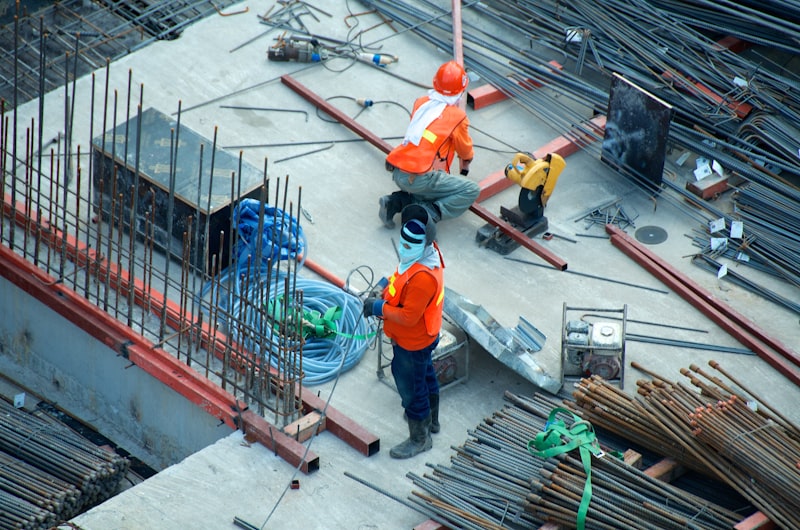
Construction + trades (statewide)
Texas construction is national-leading: 5,750+ residential permits in August 2025 alone, ~$2B monthly value. D.R. Horton (Arlington HQ) posted $31B revenue / 84,863 closings in FY25. Lennar held #1 share in three of four major TX metros. Major commercial: Turner Construction TX, AECOM, Manhattan Construction. Trade SMBs (HVAC, plumbing, electrical) ride the Austin / Dallas / Houston growth wave. Texas Hispanic workforce concentration in residential trades is structural — a bilingual operator surface isn't optional. The wedge is AI Search + Voice Agent + Workflow Ops on the Procore / ServiceTitan / Buildertrend / Trimble stack.
Fit for Texas residential homebuilders, commercial GCs, and HVAC/plumbing/electrical SMBs — 20-500 FTE, often family-business 2nd gen, bilingual ES-EN at operator level.
Read the deep-dive -
Logistics + cross-border (Laredo + Fort Worth + Houston)
Texas is the United States' gateway for USMCA freight. Laredo handled $353.94B in two-way trade in 2025 — the highest-value land port in the Western Hemisphere. BNSF Railway HQ is in Fort Worth; the Alliance intermodal facility is North America's largest inland rail port; the new Alliance Logistics District (Nov 2025) is a 1,400-acre AV-enabled freight hub. Port Houston handles more foreign tonnage than any other US port. The wedge is bilingual AI Search + Voice Agent for US-shipper queries plus Workflow Ops for CBP ACE filings, SAT pedimentos, USMCA Annex 4-B documentation, and Carta Porte 3.1 round-trip.
Fit for Texas 3PLs, customs brokers, last-mile carriers, intermodal operators, freight forwarders — 20-500 FTE, often family-business, bilingual ES-EN as identity.
Read the deep-dive -
Professional services (Houston legal + Dallas accounting)
Texas Twelve corporate law firms posted record 2025 — Vinson & Elkins led all law firms in TX energy M&A with $30.3B guided through Q3 2025. Baker Botts published an AI practice page and cites AI as the #1 client topic. Bracewell posted strongest financials in 80 years driven by data-centre infrastructure finance. Plus Big-4 Houston + Dallas + Austin tax practices, BDO, RSM, Crowe mid-tier, Andersen Tax. The wedge is AI-search citation + Knowledge Bot for client-FAQ in English and Tejano Spanish, plus Foundation pages tuned for `energy M&A AI Houston`, `Texas franchise tax CPA`, and `data center finance counsel` long-tail queries.
Fit for 1-200 FTE Texas legal, accounting, and advisory firms under Texas State Bar, Texas State Board of Public Accountancy, and federal regulators (OCC, SEC, IRS).
Read the deep-dive




Cultural + regulatory
How Texas operators actually buy.
No personal income tax, high property tax, 0.75% franchise (margin) tax. Texas does not impose personal or corporate income tax. Most entities pay a franchise tax — 0.75% standard, 0.375% retail/wholesale, 0.331% EZ Computation for 2025-26 report years (Texas Comptroller).
The trade-off: property tax rates are among the highest in the US (effective rate ~1.6-1.7%), which is why Texas advisory work skews property-tax-heavy and franchise-tax-aware in a way California or New York counsel doesn't.
The macro consequence is structural founder migration — Schwab moved to Westlake, Tesla and Oracle moved HQ to Austin, plus a long tail of CFOs and sales leaders following. The buyer pool is therefore a mix of native Texans, recent California refugees, and Mexican-American operators who've worked the border for two or three generations.
Texas has its own grid and its own grid politics. ERCOT is the only major US grid that operates largely synchronously isolated from the rest of North America. That gives Texas regulatory autonomy on interconnection, capacity, and tariff that California and the Northeast don't have.
ERCOT manages ~90% of TX electric load, 27M+ customers, 55,000+ miles of transmission, 1,460+ generation units. The Public Utility Commission of Texas (PUCT) is the state regulator. In January 2026 ERCOT formally launched two new internal organisations — Interconnection & Grid Analysis and Enterprise Data & AI — and approved a $9.4B 1,109-mile 765kV transmission super-highway to absorb data-centre + AI manufacturing load growth (Houston peak demand forecast +70% by 2031).
73% of the 225 large-load interconnect requests now on file are data-centre operators. For any AI work that touches grid load, the regulatory map is ERCOT + PUCT first, NERC + FERC second.
English-first with native Tejano Spanish as a peer locale, not a translation. Tejano Spanish has its own register — heavy Mexican lexicon (`carro`, `troca`, `celular`), Anglo loanwords absorbed at higher density than in Mexico City Spanish, faster code-switching, and a US-compliance vocabulary on top (CBP, FINRA, OCC, NIST AI RMF) that Mexican operators don't have.
Castilian Spanish content shown to a Texas buyer reads as foreign exactly as it does in Mexico City. Mexican-Spanish content from Mexico City reads close but slightly off — Mexico City Spanish doesn't carry the US-compliance overlay. The honest answer is to write English and Tejano Spanish as parallel native surfaces, not via translation pass.
Compliance map varies sharply by sector and city. Houston energy: NERC CIP for grid-connected, EPA + Texas Commission on Environmental Quality (TCEQ) for emissions, RRC (Railroad Commission of Texas) for oil & gas operations, ERCOT + PUCT for grid.
Dallas finance: OCC for nationally-chartered banks, Texas Department of Banking for state-chartered, FINRA for brokerage, SEC for advisers, NIST AI RMF as the federal AI-governance benchmark. San Antonio mil-tech: ITAR, CMMC 2.0, FedRAMP for cloud, DFARS for DoD contractors.
Laredo cross-border: CBP, SAT, USMCA Rules of Origin, Carta Porte 3.1 (Mexican side), CBP ACE filings (US side). Austin SaaS: standard SOC 2 + GDPR-equivalent for European customers + state-level privacy laws (Texas Data Privacy and Security Act effective 1 July 2024). We configure the relevant subset per engagement.
Decision pace: faster than California, similar to Mexico, slower than 'just ship it' Austin SaaS. The Texas-operator first-decision call moves fast — a Houston VP, a Dallas SVP, an Austin founder, a San Antonio USAA digital lead, a Laredo customs broker patriarch will give you a yes or no on whether to keep talking inside one or two meetings.
Procurement integration is where it slows: the energy operator has NERC CIP review, the bank has OCC vendor management review, the JBSA contractor has CMMC paperwork, the customs broker has CBP audit prep. SME cycles run 30-75 days; mid-market 60-120 days; enterprise (Schwab, USAA, ExxonMobil, BNSF tier) 4-9 months. We start with Foundation engagements so the buyer sees output before committing to the longer arc.
Examples
How operators in Texas actually use Areza.
-
Houston midstream operator absorbing ERCOT data-centre load growth
A 260-person Houston midstream operator with throughput on three Permian-to-Gulf pipelines saw its customer mix start shifting in mid-2025 as ERCOT-connected data-centre developers began locking in long-term gas supply contracts ahead of the projected +70% Houston peak demand growth by 2031. The CFO needed a sales surface that ranked for `gas supply for Texas data center` and `Permian midstream AI buildout` long-tail queries — neither of which the company had ever optimised for — plus a Knowledge Bot trained on FERC tariff filings, ERCOT large-load interconnect documentation, and the company's own gas-supply ISDA term sheets. Foundation rewrote the company page in 3 weeks with NERC CIP-aware schema and FERC + ERCOT linkages explicit. AI Search targeted twelve data-centre-adjacent supply queries. Knowledge Bot handled inbound RFP technical-questionnaire pre-fills. Three months in, three new data-centre developer RFPs landed via inbound, one signed — first net-new inbound enterprise pipeline in 18 months.
-
Austin Series B SaaS scaling into LATAM with a bilingual GTM team
A 90-person Austin Series B SaaS raising a Series C ahead of LATAM expansion needed to compete in both `[category] platform Texas` English queries and `software [categoría] México` Spanish queries while a 12-person GTM team grew to 25. Foundation rebuilt the site in 4 weeks — English-default for US investors and engineering, native Tejano Spanish with Mexican-Spanish neutrality as a peer locale for LATAM expansion, hreflang `en-US` and `es-MX` set correctly. AI Search retainer targeted fifteen cluster queries — eight English (`AI [category] Austin`, `[category] SaaS Texas`, US comparison terms) and seven Spanish (LATAM-targeted, Mexico-City-leaning vocabulary). Voice Agent inbound qualification in EN + ES with WhatsApp Business API fallback for Mexican buyers. Three months in: ChatGPT and Perplexity citations on 9 of 15 target queries, 31% of demo bookings AI-search-referred, 18% from LATAM IP origins. The Series C closed at the founder's target valuation; LATAM expansion stayed scoped at sustainable burn.
-
Laredo customs broker absorbing nearshoring volume on USMCA Annex 4-B
A 70-person Laredo customs broker (family business 3rd generation, agente aduanal patente held by the patriarch) was running flat-out on USMCA freight as Port Laredo cleared $353.94B in 2025 trade. The 3rd-gen CEO needed Voice Agent in EN + Mexican Spanish for inbound shipper calls, Workflow Ops for round-trip CBP ACE filings + SAT pedimentos + Carta Porte 3.1, and AI Search citation for `Laredo customs broker bilingual` and `USMCA Annex 4-B documentation Texas` queries. Voice Agent went live in 14 days handling 60% of inbound qualification end-to-end, in either language depending on what the caller opened with. Workflow Ops automated the CBP-side ACE filing from the same dataset that fed the SAT-side pedimento, cutting one full-time clerk's manual data re-entry. AI Search citation landed on Perplexity for both English and Spanish target queries within 11 weeks. The patriarch signed off after he saw the Voice Agent take a Spanish-only call from a McAllen-based forwarder and end-to-end book a quote without human intervention.
Let's build the foundation your business actually deserves.
PAA
People also ask
-
How much does an AI agency cost in Texas?
Texas AI agency rates range from $6,000 to $40,000/month for mid-market engagements, with Houston energy + Dallas finance deals trending higher than Austin SaaS startups. Foundation projects start at $2,400. Tier-1 envelopes from Accenture Houston, Deloitte Dallas, Vinson & Elkins legaltech advisory, or BCG Energy open at $250K+ with 8-25 FTE delivery teams under heavy NERC + OCC compliance scope.
-
How long does AI implementation take for a Texas SMB?
Foundation builds ship in 14-21 days; bilingual EN/ES Voice Agent in 14 days; Knowledge Bot with HIPAA or NERC scope in 21-30 days. SMB cycles run 30-75 days when the patriarch or VP decides directly; mid-market 60-120 days under committee; enterprise 4-9 months under OCC, FINRA, NERC CIP, ITAR, or CMMC supervision — Schwab, USAA, ExxonMobil, BNSF vendor management runs 60-90 days minimum.
-
How does ERCOT affect AI deployments in Texas?
ERCOT data-center connection requests jumped +270% MW year-over-year in 2025, with 73% of requests from data centers — Texas is the leading US state for new AI compute capacity outside Virginia. NERC CIP cybersecurity rules apply to any vendor touching the grid. Texas has no BIPA-equivalent biometric law (unlike Illinois), no state income tax, and a 1% franchise tax cap — the regulatory floor for AI work is materially lighter than California or New York.
-
What AI tools do Texas energy companies use?
Texas energy AI is anchored on OSIsoft PI (now AVEVA), Aspen Technology, and Baker Hughes Lumi — Chevron predicts equipment failure with AI in the Permian, Baker Hughes achieves 65% well-failure prediction within 30 days. ExxonMobil, ConocoPhillips, and Halliburton run internal ML on production telemetry. The default cloud stack: Azure OpenAI for ExxonMobil, AWS Bedrock for Tesla Energy, Anthropic Claude for Schwab + USAA innovation teams.
-
Should I hire an AI agency in Texas or remote from another US state?
Texas operators reward CST timezone overlap, USD pricing transparency, and pragmatic anti-hype tone — "AI transformation" decks fall flat in Houston energy and Dallas finance. For bilingual EN/ES delivery covering the Laredo-McAllen corridor (40% Hispanic population), local fluency matters. For Austin SaaS startups, remote-from-anywhere is fine if PST/CST overlap holds. NERC + OCC + FINRA scope rewards US-domiciled vendors.
Frequently asked
-
Do you deliver in English or Spanish? What about Tejano Spanish specifically?
Both, as parallel native surfaces — not via translation pass. English ships as the default for Texas operators where the buyer is Anglo, the engineering layer is US-investor-backed and English-default, or the compliance surface is fully US-federal. Spanish ships as a peer locale in Tejano / Mexican-American register — `carro` not `coche`, `troca` for pickup in trade contexts, `celular` not `teléfono móvil`, `usted` for first contact and family-business patriarchs, `tú` once informality is signalled. Castilian Spanish content is filtered out of the standard configuration because Texas buyers hear it as foreign. Voice Agent uses Mexican-Spanish phonology with Texas inflections. We partner with native Tejano copywriters for high-trust surfaces.
-
Do you price in USD? Do you handle TX state-level taxes on your invoices?
USD. Foundation starts at $2,400 USD (with extended bilingual scope from $5,500), AI Search retainer at $290/mo, Voice Agent from $1,200/mo, Knowledge Bot from $315/mo, Workflow Ops scoped per integration. Texas has no state personal or corporate income tax; the franchise (margin) tax (0.75% standard, 0.375% retail/wholesale, 0.331% EZ Computation 2025-26) applies above the no-tax-due threshold (~$2.47M for 2025) and is filed by the client, not the vendor. We invoice via Stripe + ACH in USD; Texas-resident clients above the franchise threshold handle their own Comptroller filings; we issue W-9 or W-8BEN-E as appropriate.
-
How does Texas's independent ERCOT grid affect AI work for energy operators?
Texas's grid is largely synchronously isolated from the rest of the North American interconnect — ERCOT operates as its own balancing authority covering ~90% of state load, 27M+ customers, 55,000+ miles of transmission, 1,460+ generation units, governed by PUCT (Public Utility Commission of Texas) rather than FERC for most retail matters. For AI work that touches grid load — data-centre buildouts, large-load interconnection, demand response, capacity bidding — the regulatory map is ERCOT + PUCT first, NERC + FERC second. ERCOT launched two new internal organisations in January 2026 (Interconnection & Grid Analysis + Enterprise Data & AI) and approved a $9.4B 1,109-mile 765kV super-highway to absorb 225 large-load interconnect requests (73% data centres, +270% MW YoY). We configure NERC CIP-aware schema, ERCOT large-load documentation, and PUCT-aware regulatory linkages on every energy engagement.
-
How do you handle USMCA cross-border documentation in the Laredo and El Paso corridors?
For Laredo and El Paso 3PLs and customs brokers, the round-trip is CBP ACE filings on the US side, SAT pedimentos and Carta Porte 3.1 on the Mexican side, USMCA Annex 4-B Rules of Origin documentation in English (US buyer-facing) and Spanish (Mexican operator-facing), and bilingual operator-portal flows. We ship hreflang `en-US` + `es-MX` correctly so the US shipper finds the English page and the Mexican operator finds the Spanish page. Workflow Ops automates the CBP-side filing from the same dataset that feeds the Mexican pedimento, eliminating duplicate data entry. Foundation pages surface USMCA + RRC + CBP + Carta Porte as machine-readable schema so AI overviews cite the brokerage on bilingual long-tail queries.
-
Can you handle Texas Department of Banking + OCC + FINRA compliance on the Dallas finance side?
Yes. For Dallas Schwab-adjacent, USAA-adjacent, Goldman-adjacent, and regional-bank work, we configure US-region data residency, no-training-on-customer-data contractual clauses, documented sub-processor lists, NIST AI RMF posture, and OCC vendor-management-aligned controls before any data flows. For state-chartered Texas banks, Texas Department of Banking layered supervision applies; for broker-dealers, FINRA + SEC; for investment advisers, SEC; for credit unions, NCUA. We don't bypass any of these — Schwab and USAA already have internal AI governance teams and procurement-side vendor reviews that take 60-90 days to clear. We're the vendor that shows up to those reviews with documentation pre-staged.
-
Do you support Austin, Dallas, Houston, and San Antonio differently?
Yes. Austin is tech + SaaS — faster cycles, USD-default, English-default at engineering, pricing transparency wins. Dallas is finance + corporate HQ — Charles Schwab Westlake, AT&T, ExxonMobil Spring, Goldman Sachs Dallas Tech, BNSF Fort Worth — longer cycles, OCC + TX Department of Banking + FINRA literacy required, higher tickets. Houston is energy + medical — Permian operators, supermajor IT teams, TMC (largest medical complex in the world) — NERC CIP + RRC + TCEQ literacy, ROI quoted in barrels/day or NERC-compliance hours saved. San Antonio is military + finance — USAA HQ, JBSA Lackland, NSA Texas — ITAR + CMMC + FedRAMP literacy required to even open the call. We ship per-cluster GTM motion, not a Dallas-only or Austin-only narrative.
-
How fast can a Voice Agent in English + Tejano Spanish go live?
14 days from kick-off for the standard configuration: inbound handling, qualification, calendar booking, CRM hand-off, outbound reminders, both English and Mexican-Spanish (Tejano-leaning) phonology pinned. Add a week for sector-specific compliance scripts — NIST AI RMF disclaimers for finance, NERC CIP-aware referencing for ERCOT-connected energy, ITAR-aware sub-processor controls for JBSA-adjacent, CBP + SAT cross-border for Laredo customs brokers. WhatsApp Business API integration available for Mexican-buyer-facing flows. CST timezone overlap built-in — calls during Texas business hours route correctly without an 8-hour Europe lag, and a McAllen-based forwarder calling at 7am opens to the same agent without the wrong locale.
-
What's the realistic decision timeline for a Texas SMB or mid-market engagement?
30-75 days for SMB with a single decision-maker (an HVAC SMB owner, a Laredo customs broker patriarch, a Dallas regional-bank VP). 60-120 days for mid-market with a committee. 4-9 months for enterprise under OCC, FINRA, NERC, ITAR, or CMMC supervision. Texas operators decide faster than California ones on first commitment because the patriarch / CEO / VP is typically the decider, not a committee. The contract integration phase is slower — the vendor management review at Schwab, USAA, ExxonMobil, BNSF, or any ERCOT-participant takes 60-90 days minimum. We structure engagements so the buyer sees Foundation output inside 2-4 weeks before committing to a multi-quarter arc, and we run retainers in USD with no FX exposure since the buyer pays in USD and the vendor invoices in USD.
Where to start
Services that fit Texas.
- AI Search
The single highest-leverage service for Texas SMBs and mid-market — bilingual EN + Tejano Spanish citation infrastructure that competes against Big-4 Houston directories and Austin VC blog content for `AI agency [city]` and `agencia de IA Texas` long-tail queries.
- Foundation
English-first conversion build in 2-4 weeks from $2,400 USD, with native Tejano Spanish as a peer locale on bilingual scopes from $5,500. The prerequisite for Texas Data Privacy and Security Act trust signals, OCC / Texas Department of Banking-aware finance pages, and ERCOT-aware energy pages.
- Voice Agent
Native English + Tejano Spanish voice agent live in 14 days. Closes the 60-second response gap for Texas SMB inbound and for Mexican-buyer cross-border calls from McAllen, Laredo, El Paso. WhatsApp Business API integration for Mexican-buyer-facing flows.
- Workflow Ops
CBP ACE + SAT pedimentos + Carta Porte 3.1 + ERCOT large-load + NIST AI RMF + Texas Department of Banking integrations without an in-house ML team. Solves the margin blocker that filters Big-4 $250K+ quotes out at procurement.
- Knowledge Bot
Bilingual EN + Tejano Spanish internal knowledge surface trained on Texas Comptroller franchise-tax rules, ERCOT tariff filings, OCC vendor management, CBP ACE manuals, NIST AI RMF posture. Cuts AP and customer-service ticket load without violating sector compliance.
- Growth Stack
End-to-end bundle for Texas mid-market scaleups: Foundation + AI Search + Voice Agent + Workflow Ops + Knowledge Bot configured for Houston / Dallas / Austin / San Antonio cluster GTM with USMCA bilingual coverage on demand.
Further reading
On AI search + Nordic buyers.
Reviewed by Nikita Janockin, Founder · Last updated 17 May 2026
Sources (8) →
- Statista citing BEA — #2 US state economy after California, third-largest sub-national economy in the world after China and California
- Dallas Fed 2026 — Texas job-growth outlook; Dallas-Fort Worth average hourly earnings +7.2% YoY 2024-2025
- PRNewswire Feb 2026 — highest-value land port in the Western Hemisphere; $211B imports / $128.6B exports in 2024 base year (Texas Comptroller)
- EIA 2026 refined estimates — Bone Spring, Spraberry, Wolfcamp plays anchor the basin; full-year 2025 average ~6.6M b/d
- Crunchbase News Feb 2026 — all-time-high year; $4B classified as late-stage; SaaS + semiconductor + AI infrastructure led capital allocation
- US Census via Texas Standard 2022 update — Hispanic Texans edged past non-Hispanic white Texans (39.8%); ~29% of TX residents 5+ speak Spanish at home (ACS)
- ERCOT 2025 — manages ~90% of TX electric load, 27M+ customers, 55,000+ miles of transmission, 1,460+ generation units; $9.4B 1,109-mile 765kV super-highway approved
- Charles Schwab investor relations / About Schwab — HQ relocated from San Francisco to Westlake effective 1 Jan 2021; 70-acre campus now Schwab's largest single employment centre