Texas · Logistics & cross-border
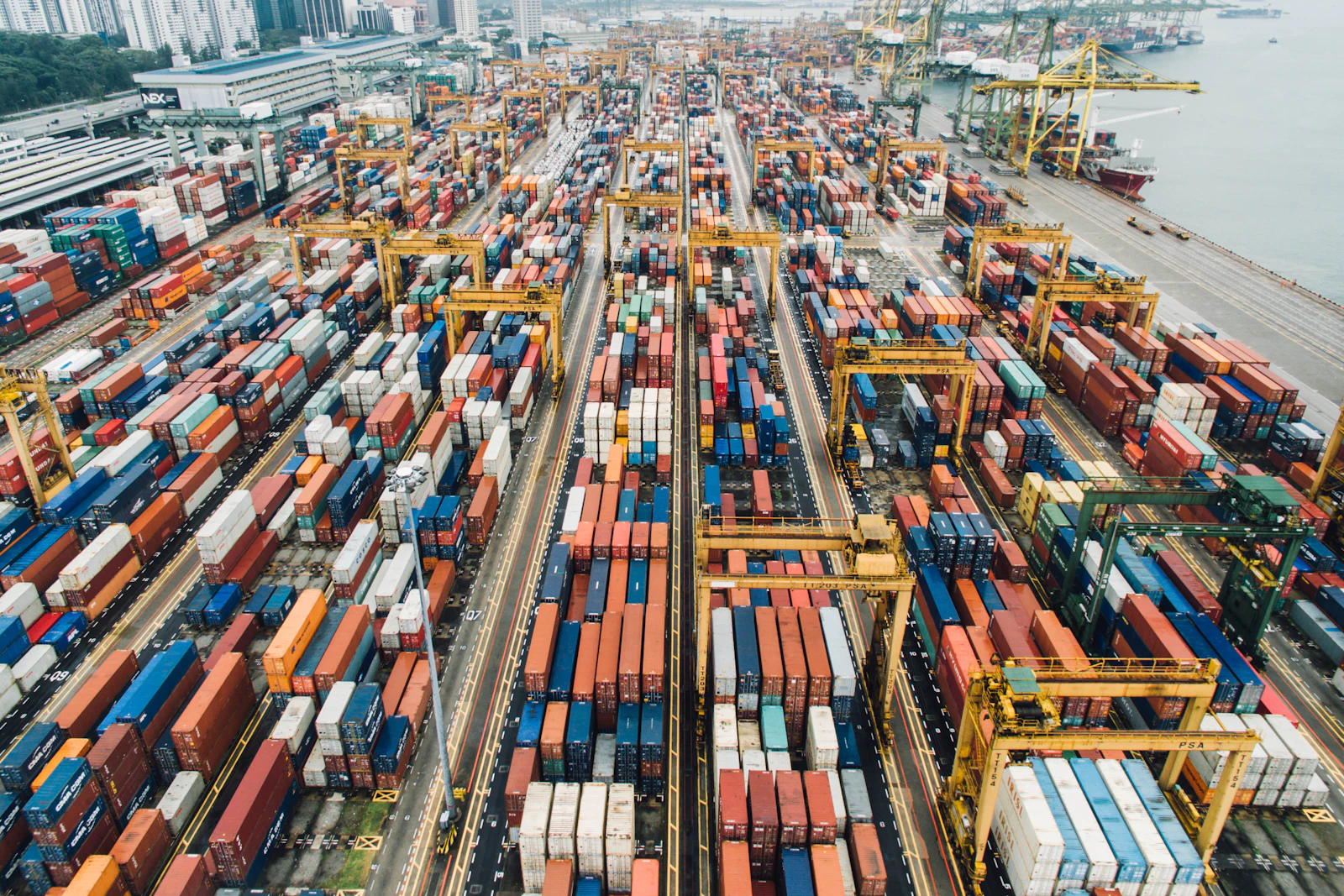
Port Laredo cleared $353.94 billion in 2025 trade — the highest-value land port in the Western Hemisphere, and the AI buyer is a bilingual customs broker, not a Big-4 consultancy.
Port Laredo processed $353.94 billion in two-way trade in 2025, a $14.94 billion increase over 2024 (PRNewswire), with imports at $211 billion (63.2%) and exports at $128.6 billion (36.8%). US-Mexico freight trade reached $872.8 billion in 2025, up 3.9% YoY — Mexico remains the #1 US trade partner (Mexico Business News). BNSF Railway is headquartered in Fort Worth; the Alliance intermodal facility is North America's largest inland rail port; the new Alliance Logistics District (launched November 2025) is a 1,400-acre AV-enabled freight hub. Port Houston handles more foreign tonnage than any other US port. And the operator who clears that freight — Laredo customs broker, McAllen 3PL, El Paso last-mile carrier, Houston port-area freight forwarder — is structurally bilingual at the patriarch + next-gen tier, with CBP ACE filings on the US side and SAT pedimentos + Carta Porte 3.1 on the Mexican side as the round-trip workflow. We close the gap between the Big-4 transportation envelope and the family-business 3PL + customs broker tier with the six-service Areza stack.
Book a Texas logistics strategy call-
$353.94B (+$14.94B YoY) · highest-value land port Western Hemisphere
Port Laredo two-way trade 2025 (PRNewswire)
Source: PRNewswire Feb 2026 — $211B imports / $128.6B exports in 2024 base year (Texas Comptroller Port of Entry data); 2025 import-export split similar
-
$872.8B (+3.9% YoY) · Mexico #1 US surface-freight partner
US-Mexico freight trade 2025 (Mexico Business News)
Source: Mexico Business News 2026 — Laredo + Eagle Pass + El Paso + Brownsville handle the bulk; nearshoring + USMCA continues to drive volume
-
North America's largest inland rail port · 1,400-acre AV-enabled logistics district
BNSF Alliance intermodal (Fort Worth)
Source: Hillwood + BNSF + City of Fort Worth Nov 2025 — Alliance Logistics District launch; BNSF expanding to 3rd Texas logistics centre (Gunter, Sweetwater, Cleveland)
-
Largest US port by foreign tonnage · container volumes growing
Port Houston foreign tonnage
Source: Port Houston Authority 2025 reports — Houston Ship Channel anchors the largest US foreign-tonnage handler; major LNG + petrochemical + container mix
-
#1 US crude export port · USMCA + EU + Asia destinations
Port of Corpus Christi crude exports
Source: Port of Corpus Christi Authority 2025 — Permian crude pipeline-to-ship terminus; structural Texas Gulf Coast export gateway
-
40.2% Hispanic statewide · materially higher in border-region 3PL + customs broker tier
Texas Hispanic share (US Census)
Source: US Census 2022 + RGV / El Paso / Laredo demographics — Hispanic concentration 80%+ in Laredo, McAllen, Brownsville; bilingual operator workforce is structural
-
Mandatory CFDI 4.0 invoicing · Carta Porte 3.1 effective 17 July 2024 for goods movement
CFDI 4.0 + Carta Porte 3.1 (SAT)
Source: SAT + VATupdate 2024-25 — Carta Porte 3.1 applies to any goods movement on Mexican territory; CFDI 4.0 fines MXN $19,700-$112,650 per malformed invoice
-
Automated Commercial Environment · single window for US-Mexico cross-border freight
CBP ACE filings (US Customs and Border Protection)
Source: CBP ACE portal 2025-26 — entry summary + manifest + duty + drawback filings; mandatory for all commercial freight; integrates with USMCA Annex 4-B documentation
AI landscape
The named tools shaping Logistics & cross-border in Texas.
-
Project44 + FourKites + Tive (supply-chain visibility)
Project44 (Chicago HQ, heavy TX customer base) ships supply-chain visibility — real-time freight tracking, ETA prediction, exception management. FourKites (Chicago, peer) competes head-to-head. Tive (Boston) ships shipment-level IoT sensor tracking for high-value or temperature-sensitive cargo. For Texas 3PLs running cross-border USMCA freight, these visibility platforms integrate with CBP ACE filings on the US side and SAT pedimentos on the Mexican side, surfacing freight status from origin to final delivery.
-
McLeod Software + Trimble Transportation TMW
McLeod Software (Birmingham AL, dominant TMS in Texas trucking) and Trimble Transportation TMW (Mayfield Heights OH, peer) ship the transportation management system substrate for Texas 3PLs + asset-based carriers + freight brokers. Particularly load-bearing in the Texas trucking density — Werner, US Xpress, Schneider, Stevens Transport (Dallas), Mesilla Valley Transportation (El Paso), Saia (Johns Creek but heavy TX presence). AI overlays — load matching, rate optimisation, capacity forecasting — sit on top of McLeod or TMW, not parallel to it.
-
Samsara + Motive + Geotab (fleet telematics)
Samsara (San Francisco), Motive (San Francisco), Geotab (Oakville Canada, heavy US presence) ship fleet telematics + ELD + dashcam + driver-safety scoring + AI-driven coaching. For Texas asset-based carriers + last-mile + drayage operators, these are operational substrate. AI overlays — predictive maintenance on the rig, AI-driven driver-coaching for HOS compliance, automated DOT inspection prep — slot on top. The Laredo + El Paso drayage tier increasingly runs Samsara or Motive across mixed Anglo + Mexican-American + Mexican-national driver pools.
-
Loadsmart + Uber Freight + Convoy-tech (digital brokerage)
Loadsmart + Uber Freight + the legacy Convoy tooling (Convoy itself shut down 2023; assets distributed) cover AI-optimised digital freight brokerage. For Texas-based freight brokers building digital-first booking flows, these are competitive references. Mexican-side counterpart: Nuvocargo (Mexico City HQ, heavy Texas operations) covers cross-border freight matching with USMCA + CBP ACE awareness built-in.
-
CBP ACE + SAT pedimentos + Carta Porte 3.1 integration
Cross-border USMCA freight requires round-trip documentation: CBP ACE entry summary + manifest on the US side, SAT pedimento + Carta Porte 3.1 on the Mexican side, USMCA Annex 4-B Rules of Origin documentation on both. For Laredo + Eagle Pass + El Paso + Brownsville customs brokers and 3PLs, the dual-filing workflow is the operational core; manual data re-entry from CBP ACE to SAT pedimento (or vice versa) costs 2-4 FTE-hours per shipment. Workflow Ops engagements integrate the dual-filing data pipeline so the data flows from one source to both filings.
-
Anthropic Claude + OpenAI ChatGPT Enterprise (US region)
Texas logistics defaults to US-region inference. CBP ACE data has CBP-side data-handling expectations (sub-processor disclosure, US-person access controls for ITAR-controlled cargo, encryption at rest + in transit). For SAT-side data the Mexican LFPDPPP 2025 (administered by SABG after INAI dissolution March 2025) applies — explicit international-transfer treatment in privacy notice. Contractual no-training-on-customer-data clauses mandatory. ChatGPT Enterprise + Anthropic Claude ship the zero-retention API tiers that clear both regulatory bars.
-
n8n + Make (EU-resident) + Zapier (US-resident default)
Texas logistics workflow automation still defaults to Zapier despite CBP + SAT dual-jurisdiction pressure. For trade SMB customs brokers + 3PLs the regulatory cost of US-resident Zapier hasn't crossed the switching threshold. For Tier-1 + Tier-2 (Mexican-side LFPDPPP-pressured) operators, n8n (self-hostable inside the controlled cloud) and Make (EU-resident) become operator defaults once Mexican-side counterparty contracts require LFPDPPP international-transfer documentation.
Operational reality
What a Laredo customs broker, McAllen 3PL, El Paso drayage operator, or Houston port-area freight forwarder looks like.
Four operating corridors, four patterns. Laredo–Nuevo Laredo is the highest-value corridor — $353.94B Port Laredo two-way trade in 2025, the highest-value land port in the Western Hemisphere. Eagle Pass–Piedras Negras runs the secondary I-35 corridor north of Laredo. El Paso–Ciudad Juárez handles maquiladora + auto-electronics + medical-device freight.
McAllen–Reynosa anchors the lower Rio Grande Valley with heavy auto-parts + consumer-goods volume. Plus Brownsville–Matamoros on the Gulf side. Each corridor has its own customs-broker density, its own CBP port-of-entry processing speed, its own trucking-density, and its own SAT-side maquiladora cluster.
Fort Worth + Dallas anchor the inland intermodal pole. BNSF Railway HQ in Fort Worth; Alliance intermodal facility (North America's largest inland rail port); Alliance Logistics District (1,400 acres, AV-enabled, launched Nov 2025); BNSF Gunter facility breaking ground March 2026 as 3rd Texas BNSF logistics centre.
Union Pacific dense Texas operations. The Fort Worth inland-port complex serves as the structural intermodal handoff between West Coast port arrivals (LA/Long Beach + Oakland + Seattle/Tacoma) and the eastern US distribution network — Texas in the middle is the cost-advantaged inland-port alternative to the East Coast.
Port Houston + Corpus Christi run the Gulf gateway. Port Houston is the largest US port by foreign tonnage; mixed container + LNG + petrochemical + bulk. Corpus Christi is the #1 US crude-export port (Permian-to-ship terminus). Beaumont–Port Arthur handles petrochemical + refined products.
Galveston covers cruise + general cargo. The Gulf Coast Texas ports together handle the bulk of US energy export volume; container volumes through Houston grow steadily on the back of Latin American + EU + Asian transpacific routing.
The customs broker + 3PL operator is the structural Texas logistics employer. A representative shape: a Laredo customs broker at 70 FTE, family business 3rd generation (the patriarch holds the agente aduanal patente on the Mexican side; the next-gen runs CBP licensed customs broker on the US side), bilingual operations from the patente-holder tier down.
An El Paso 3PL at 120 FTE, mixed warehousing + drayage + cross-border trucking, 5 maquiladora customers on retainer. A McAllen freight forwarder at 50 FTE, auto-parts focus, RGV-anchored, bilingual at the dispatch tier. A Houston port-area freight forwarder at 200 FTE, container + petrochemical mix, English-default at the office tier but Spanish-default at the warehouse + drayage-driver tier.
Bilingual is structural identity, not feature. Laredo, El Paso, McAllen, Brownsville are 80%+ Hispanic at the population level; the customs broker + 3PL operator pool is structurally Mexican-American at the patriarch tier and bilingual through to the dispatch + warehouse + driver tier. Houston port-area is mixed — English-default at the freight-forwarder office tier, Spanish-default at the drayage-driver tier.
Cross-border counterparty communications run in Spanish (the Mexican-side customs broker, the maquiladora exporter, the Monterrey freight broker, the CDMX commodity buyer). An AI tool that ships English-only at the operator tier or at the cross-border counterparty surface misses the structural conversation surface.
Pace is fast on first decision, slow on regulatory integration. A Laredo customs broker patriarch decides in 1-2 conversations over coffee — referrals are how this market opens, cold outbound mostly doesn't work.
The contract integration phase takes 60-120 days because CBP + SAT integration certification + LFPDPPP international-transfer documentation + USMCA Annex 4-B Rules of Origin compliance review all stack. SME cycles run 30-90 days for cleared-introduction deals; mid-market 60-150 days; enterprise (Tier-1 BNSF + Port Houston + Maersk Logistics) 4-9 months.
Areza service mapping
Where each service lands inside a Texas customs broker, 3PL, intermodal operator, or freight forwarder.
Foundation — English-first commercial surface for US shipper + US-side buyer procurement-facing flows, with native Mexican Spanish operator surface for cross-border counterparty comms (Mexican-side customs broker, maquiladora exporter, Mexican-side freight broker, Mexican-side commodity buyer).
Hreflang `en-US` and `es-MX` set correctly. USD pricing visible. CBP-side compliance schema (FMCSA carrier verification, CBP-licensed-customs-broker validation, ITAR sub-processor awareness for export-controlled cargo). USMCA Annex 4-B Rules of Origin documentation surfaced as machine-readable schema.
AI Search — citation for logistics-vertical intent in both English and Mexican Spanish.
`Laredo customs broker bilingual`, `cross border 3PL Texas`, `USMCA freight broker Houston`, `maquiladora 3PL El Paso`, `agente aduanal Laredo`, `broker de carga IA bilingüe Houston Laredo`, `logística frontera Texas USMCA` — these queries today return generalist 3PL aggregator content + Big-4 transportation marketing + Nuvocargo + Estafeta + DHL Mexico vendor pages.
The Texas cross-border bilingual citation gap is wide and structural — most family-business customs broker websites are English-only with weak Spanish translation-pass; competitors who ship native Mexican Spanish content with CBP + SAT + USMCA + Carta Porte 3.1 anchors capture both ChatGPT + Perplexity citation and Mexican-counterparty search visibility.
Voice Agent — bilingual EN + Mexican Spanish for inbound shipper calls, dispatch coordination, US-Mexico cross-border counterparty calls, after-hours emergency-routing. Particularly load-bearing for Laredo + El Paso + McAllen customs brokers where the cross-border counterparty is Spanish-dominant and the US shipper is English-dominant — the Voice Agent opens to the caller's first-word language and stays there.
Integrated with McLeod / Trimble TMW dispatch + Samsara fleet telematics + Project44 visibility. WhatsApp Business API channel integrated for Mexican-counterparty flows (Mexican customs brokers + maquiladora exporters routinely operate primary comms through WhatsApp).
Workflow Ops — automation around the CBP ACE + SAT pedimento + Carta Porte 3.1 + USMCA Annex 4-B + McLeod / Trimble TMW + Samsara stack. The dual-filing workflow (CBP ACE + SAT pedimento for cross-border freight) is operationally where 2-4 FTE-hours per shipment evaporate to manual data re-entry.
Workflow Ops integrates the dual-filing data pipeline — the customs broker enters origin + destination + commodity + HTSUS / NICO codes once, the system generates CBP ACE entry summary, SAT pedimento, USMCA Annex 4-B Rules of Origin affidavit, and Carta Porte 3.1 manifest in parallel. Migration to n8n (self-hostable, US-region with LFPDPPP-aligned sub-processor disclosure on the Mexican-side counterparty integration) is a 6-10 week deliverable.
Knowledge Bot — bilingual operations docs + CBP ACE filing reference + SAT pedimento procedures + Carta Porte 3.1 requirements + USMCA Annex 4-B Rules of Origin documentation + HTSUS / NICO classification reference + FMCSA + Hazmat + ITAR cargo classification reference.
Particularly load-bearing for customs broker + 3PL operations where the bot must answer dispatch-tier or warehouse-tier questions in Spanish without hedging — `¿qué documento USMCA necesito para este envío de Monterrey?` should return a clear answer that satisfies CBP audit expectations. Drops to a licensed customs broker on novel questions. AWS US-East + US-West-2 defaults with on-premise hybrid option for ITAR-controlled cargo flows.
Growth Stack — full-funnel for Texas cross-border + intermodal + Gulf port expansion. Paid (LinkedIn + American Shipper + Journal of Commerce + FreightWaves), organic, content (Texas Customs Brokers and Forwarders Association, NCBFAA national reference appearances, AGC Mexico cross-references for maquiladora flows), and AI-search visibility tracked as one dashboard. English + Mexican Spanish creative pipelines kept distinct, not translated.
Regulatory + cultural
CBP ACE, SAT pedimentos, USMCA, Carta Porte 3.1, FMCSA, LFPDPPP — how Texas logistics actually buys.
CBP ACE is the US-side single window. US Customs and Border Protection's Automated Commercial Environment portal handles entry summary (CBP Form 7501), manifest (CBP Form 7533 or electronic equivalent), duty + tax + fee, drawback, FTZ admissions, and trade-data reporting.
For Texas customs brokers, ACE filing is the operational core — every cross-border shipment requires ACE entry. CBP licensure (broker license under 19 CFR 111) is required for the brokerage operation; importer-of-record + ultimate-consignee + customs-bond + power-of-attorney all live inside the ACE-anchored workflow.
SAT pedimentos + Carta Porte 3.1 are the Mexican-side requirements. Servicio de Administración Tributaria (SAT) pedimentos are the Mexican-side customs entry — every shipment crossing into Mexico requires a SAT pedimento with the correct fracción arancelaria (Mexican equivalent of HTSUS), forma de pago, and IVA / IEPS / impuesto computation.
Carta Porte 3.1 (effective 17 July 2024) is the Mexican-side transportation manifest requirement — any goods movement on Mexican territory must have a Carta Porte 3.1 CFDI complement. CFDI 4.0 + Carta Porte 3.1 non-compliance carries fines of MXN $19,700-$112,650 per malformed invoice (VATupdate). The cross-border workflow is dual-jurisdiction — ACE on the US side + pedimento + Carta Porte on the Mexican side — and the data must round-trip cleanly.
USMCA Annex 4-B Rules of Origin govern preferential treatment. USMCA (US-Mexico-Canada Agreement, in force 1 July 2020) replaced NAFTA with stricter rules-of-origin for automotive (75% regional value content, 70% steel + aluminum requirement, labor value content 40% at $16/hr) and tightened textile rules.
For Texas customs brokers handling automotive + electronics + textile cross-border flows, USMCA Annex 4-B Rules of Origin compliance is the preferential-treatment gate — non-compliant shipments lose duty-free treatment + face MPF assessment. The certification of origin must be on file + accessible for 5 years post-import.
FMCSA + Hazmat + ITAR layer on for specific cargo. FMCSA (Federal Motor Carrier Safety Administration) regulates commercial trucking — Hours of Service, ELD compliance, DOT inspection, MC + USDOT numbers. For Texas trucking-side operators, FMCSA compliance is operational table-stakes. Hazmat regulations (49 CFR Parts 100-185) apply to flammable, corrosive, oxidising cargo; specialised carrier authority required.
ITAR (International Traffic in Arms Regulations) governs defense-related cargo + technical data; US-person-only access required for ITAR-controlled flows. For Texas customs brokers handling defense-contractor cross-border freight (the El Paso–Ciudad Juárez maquiladora segment includes meaningful defense-adjacent volume), ITAR awareness is structural.
Texas trucking + intermodal cluster is the structural employment base. Werner Enterprises (Omaha but heavy TX ops), US Xpress, Stevens Transport (Dallas), Mesilla Valley Transportation (El Paso), Saia (Johns Creek but TX-dense), Yellow Corp legacy (defunct 2023 but TX terminals re-distributed), Old Dominion Freight Line, Estes Express, J.B.
Hunt intermodal-heavy. Plus the BNSF + UP intermodal layer. Texas trucking density is the largest in the US by absolute volume; the cross-border drayage tier (Laredo + El Paso + McAllen + Brownsville) is overwhelmingly Mexican-American + Mexican-national driver pool.
The Texas logistics operator register: numerate, decisive, anti-deck-theatre. A Laredo customs broker patriarch wants a USD envelope, three case studies from peer customs brokers (volume size ±50% match), demonstrated CBP ACE + SAT pedimento integration competency, and a 60-day pilot period with clear ROI metrics.
References to CBP ACE + SAT pedimento + Carta Porte 3.1 + USMCA Annex 4-B + HTSUS classification + FMCSA HOS + McLeod / Trimble TMW + Samsara by name signal operator literacy. Decision pace is fast on first commitment (the patriarch + next-gen operator decide together, often inside one meeting); regulatory + integration phase is slow.
Search + AI citation gap
Why Texas customs brokers and 3PLs are invisible against Big-4 transportation marketing + freight aggregator content.
For logistics-vertical queries like `Laredo customs broker`, `cross-border 3PL Texas`, `USMCA freight broker Houston`, `maquiladora 3PL El Paso`, ChatGPT and Perplexity today cite FreightWaves editorial, Journal of Commerce + American Shipper, Big-4 transportation-practice whitepapers (Deloitte Transportation, EY Logistics, McKinsey Travel-Logistics-Infrastructure), Nuvocargo + Estafeta + DHL Mexico vendor pages, and FMCSA + CBP government pages.
Texas family-business customs brokers + 3PLs almost never surface — not because they don't have operational depth, but because their content isn't structured for AI extraction.
The structural reason: the freight-aggregator + Big-4-marketing game has 15+ years of inertia and an in-house team of 20-50 marketing staff per vendor. The Laredo customs broker with 70 FTE has a part-time office manager doing the website on top of dispatching + customs filing + accounting.
The output gap shows up in AI citation share: ChatGPT cites Nuvocargo for `Laredo customs broker bilingual`, never the 70-FTE 3rd-generation Laredo family broker with a 4.9-star Google rating + 40-year CBP audit history + bilingual operator surface.
The fix is structured trade-broker content — with LocalBusiness + Service + FAQPage schema, with named-operator quotes, with sourced CBP audit history references, with bilingual Spanish at the operator surface, with USMCA + Carta Porte 3.1 anchored vocabulary — that AI extractors can parse and cite.
Areza's wedge: sustained Texas-anchored cross-border logistics content with verifiable sources (CBP licensed customs broker validation, FMCSA carrier verification, USMCA Annex 4-B Rules of Origin documentation references, Carta Porte 3.1 SAT compliance references, named patriarch + next-gen-operator quotes), schema markup in both English and Mexican Spanish, llms.txt published with `en-US` + `es-MX` scoping, plus reference appearances in Texas Customs Brokers and Forwarders Association, NCBFAA, AGC Mexico, Texas Trucking Association, Texas Motor Transportation Association.
The citation graph shifts within 90-120 days. The deliverable is measurable — track citation share in ChatGPT, Perplexity, Gemini, and Bing Copilot for a defined Texas cross-border keyword set, weekly, with screenshots, against aggregator + Big-4 + Nuvocargo + Estafeta incumbents.
Case studies
Public patterns in Logistics & cross-border that inform the Areza wedge.
-
Port Laredo $353.94B 2025 — what the highest-value land port in the Western Hemisphere signals for the family-business customs broker tier
Port Laredo cleared $353.94 billion in two-way trade in 2025 — the highest-value land port in the Western Hemisphere, up $14.94 billion year-over-year (PRNewswire February 2026). The signal for the Laredo + Eagle Pass + El Paso + McAllen family-business customs-broker tier: nearshoring + USMCA continues to compound, and the customs-broker who can ship bilingual AI infrastructure (Voice Agent in EN + Spanish, Knowledge Bot for CBP + SAT + Carta Porte reference, Workflow Ops for dual-jurisdiction filing) captures the inbound flow that Nuvocargo + Estafeta + DHL Mexico vendor marketing currently absorbs in ChatGPT and Perplexity citations. The Series A-D Texas cross-border wedge isn't `should we adopt AI?` It's `which AI overlay fits our existing McLeod + Project44 + CBP ACE + SAT pedimento stack without a 12-month integration project?` Areza's Foundation + AI Search bundle is engineered on that pattern — Laredo family-business 3PL shipping into US-shipper + Mexican-counterparty surfaces on a single bilingual architecture, with CBP + SAT + USMCA + Carta Porte 3.1 surfaced as machine-readable integration schema.
-
Alliance Logistics District + BNSF Fort Worth — what AV-enabled inland-port infrastructure signals for the intermodal operator tier
The Alliance Logistics District launched in November 2025 — Hillwood + BNSF + City of Fort Worth — as a 1,400-acre AV-enabled freight hub anchored by BNSF's Alliance intermodal facility (North America's largest inland rail port). BNSF expanding to a 3rd Texas logistics centre at Gunter (Grayson County) breaking ground March 2026, alongside existing Sweetwater + Cleveland-near-Houston facilities. The signal for the Texas intermodal-operator tier — the J.B. Hunt + Schneider + Werner + XPO intermodal-heavy carriers, plus the long tail of regional drayage + container-pool operators — is that Texas inland-port infrastructure is being rebuilt for autonomous freight + AI-coordinated load matching. The AI overlay (predictive ETA + capacity matching + autonomous-vehicle coordination + DOT-compliance automation) sits on top of the BNSF + UP rail network + the McLeod / Trimble TMW substrate. Areza's Voice Agent + Workflow Ops bundle integrates the intermodal-operator workflow with documented FMCSA + DOT compliance and bilingual driver-tier comms for the mixed Anglo + Mexican-American driver pool.
-
El Paso–Ciudad Juárez maquiladora 3PL — bilingual Voice Agent and CBP/SAT dual-filing integration
A 130-person El Paso 3PL serving 6 Ciudad Juárez maquiladora customers (mixed auto-electronics + medical-device + textile assembly) saw cross-border shipment volume grow 22% YoY as USMCA nearshoring compounded, with operations bottlenecked by manual CBP ACE + SAT pedimento + Carta Porte 3.1 dual-data-entry running at ~3 FTE-hours per shipment. Voice Agent in 14 days bilingual EN + Mexican Spanish handling inbound from maquiladora dispatch + US shipper coordination + after-hours emergency-routing. Workflow Ops integrated the CBP + SAT + Carta Porte dual-filing pipeline — the customs broker enters shipment data once + the system generates ACE entry summary + SAT pedimento + USMCA Annex 4-B affidavit + Carta Porte 3.1 manifest in parallel. Three months in: per-shipment data-entry time dropped from ~3 FTE-hours to ~25 minutes, dual-filing error rate dropped from ~3% to ~0.2%, the 3PL absorbed two new maquiladora customers without adding office-tier headcount. The patriarch agente-aduanal signed off after the first month of zero CBP rejections + zero SAT pedimento errors.
Let's build the foundation your business actually deserves.
PAA
People also ask
-
How much does AI cost for a family-business customs broker in Laredo?
Laredo + McAllen + El Paso family-business customs brokers + 3PLs typically deploy AI at $1,200–$5,000/month — Voice Agent for bilingual dispatch, Knowledge Bot for CBP ACE + SAT pedimento workflow reference, AI Search for category citation. Foundation rebuilds from $2,400. Port Laredo moved $353.94B in 2025 two-way trade (+$14.94B over 2024), making it the highest-value land port in the Western Hemisphere. The buyer filter is bilingual EN-ES as identity, not feature.
-
What does Mexico's Carta Porte 3.1 plus US CBP ACE require of a cross-border 3PL?
Carta Porte 3.1 (Mexico SAT, updated July 2024) requires structured electronic freight documentation across Mexican land freight, layered alongside CBP ACE filings on the US side and USMCA Annex 4-B rules of origin. AI vendors selling into cross-border 3PLs need to handle SAT pedimento + CBP ACE dual-filing, LFPDPPP-aware data residency for Mexican-side personal data, and bilingual Mexican Spanish at the dispatcher level. Areza Workflow Ops configures the dual-filing automation.
-
Does the BNSF Alliance Logistics District change AI buyer profiles in Fort Worth?
Yes. The Alliance Logistics District launched November 2025 — 1,400 acres, Hillwood + BNSF + City of Fort Worth — enables autonomous-vehicle + heavy-haul freight ops, anchored on BNSF Railway HQ at 2650 Lou Menk Drive Fort Worth and the Alliance intermodal facility (North America's largest inland rail port). BNSF is breaking ground on Gunter (Grayson County) in March 2026 — 6th BNSF logistics centre, 3rd in Texas. AI buyer demand for visibility + AV-ready dispatch is shifting north.
-
Can Areza integrate McLeod, Project44, FourKites, and Samsara?
Yes. McLeod Software dominates Texas TMS adoption; Trimble Transportation TMW competes; Project44 and FourKites handle freight visibility; Samsara and Motive run fleet telematics; Loadsmart and Uber Freight ship digital brokerage. Areza Workflow Ops configures integration on top of the customer's existing stack rather than replacing the TMS. Voice Agent + Knowledge Bot + AI Search citation infrastructure run adjacent. Convoy technology was absorbed in the 2023 closure; alternative stacks fill the gap.
-
Why is bilingual EN-ES non-negotiable for Texas cross-border logistics AI?
Family-business 2nd-gen customs brokers and 3PL owners in Laredo, McAllen, and El Paso are bilingual ES-EN as identity, not feature. Mexico is the #1 US trade partner — US-Mexico freight 2025 hit $872.8B (+3.9% YoY) — and Houston port-area + Fort Worth BNSF/Alliance corridor staffing routinely operates in Spanish at the dispatcher level. A Voice Agent that ships only English fails the operational reality on day one; Mexican Spanish phonology with Tejano-aware register is the baseline.
Frequently asked
-
Does Areza understand CBP ACE, SAT pedimentos, USMCA Annex 4-B, and Carta Porte 3.1?
Yes. The dual-jurisdiction cross-border workflow is operational substrate for Texas customs brokers + 3PLs — CBP ACE entry summary + manifest on the US side, SAT pedimento + Carta Porte 3.1 on the Mexican side, USMCA Annex 4-B Rules of Origin documentation on both. We integrate with Workflow Ops to pipeline the data so the broker enters shipment details once and the system generates all four documents (ACE + pedimento + USMCA affidavit + Carta Porte 3.1 manifest) in parallel. We don't replace the licensed customs broker (CBP licensure under 19 CFR 111 + Mexican agente aduanal patente) or the legal certification of origin signoff — we ship the data plumbing + AI overlay that makes the licensed broker's work faster and reduces dual-filing error.
-
How does Areza handle bilingual EN + Mexican Spanish for US shippers + Mexican counterparties?
Two-tier voice. The US-shipper-facing surface is English-default (the shipper-side procurement team is typically English-dominant). The Mexican-counterparty-facing surface is Mexican Spanish-default (the Mexican customs broker, maquiladora exporter, freight broker, commodity buyer is Spanish-dominant). Voice Agent opens to the caller's first-word language; switches if the caller switches. Mexican lexicon throughout — `aduana` for customs, `pedimento` not `entry summary`, `carga` for freight, `tráiler` for tractor-trailer, `usted` for first-contact counterparty calls and family-business patriarch communications, `tú` once informality is signalled. Knowledge Bot ships bilingual CBP + SAT + USMCA + Carta Porte 3.1 reference. WhatsApp Business API integration available for Mexican-counterparty flows (Mexican customs brokers routinely operate primary comms in WhatsApp).
-
Can you handle ITAR-controlled cargo + Hazmat + FMCSA compliance?
Yes for the workflow + AI overlay layer with explicit limitations. For ITAR-controlled defense cargo, Areza staff are EU citizens — we do not handle ITAR-controlled data directly. We integrate with the client's ITAR-cleared sub-processors and configure the workflow boundary so ITAR-controlled cargo data never crosses into Areza-managed infrastructure. For Hazmat cargo (49 CFR Parts 100-185), we integrate Workflow Ops with the carrier's Hazmat-permit-holder authority + DOT manifest requirements + UN/ID number classification. For FMCSA compliance — HOS via ELD, DOT inspection prep, MC + USDOT number management — we integrate with Samsara + Motive fleet telematics + the carrier's TMS for end-to-end HOS + DOT compliance documentation.
-
Do you support BNSF + Union Pacific intermodal and Texas Alliance Logistics District workflows?
Yes. For Texas intermodal operators integrating with BNSF Alliance (North America's largest inland rail port), BNSF Cleveland-near-Houston facility, BNSF Sweetwater facility, BNSF Gunter (March 2026 groundbreaking), and the Alliance Logistics District AV-enabled 1,400-acre freight hub, we configure workflow integrations with BNSF Logistics API + Union Pacific MyUPRR + container-pool tracking + intermodal-load matching. For AV-enabled freight workflows inside the Alliance Logistics District, we integrate with the operator's autonomous-vehicle coordination layer (Aurora Innovation, Kodiak Robotics, TuSimple-successor operations) where applicable.
-
What about LFPDPPP and Mexican-side data residency for cross-border counterparty work?
LFPDPPP 2025 (Mexican federal data protection law, in force since 21 March 2025, administered by SABG after INAI dissolution) requires explicit international-transfer treatment in the privacy notice + contract for any vendor outside Mexico. For Texas customs brokers + 3PLs operating cross-border with Mexican-side counterparties, the practical compliance map: documented sub-processor list disclosed to the Mexican counterparty, LFPDPPP-aligned privacy notice in Mexican Spanish, contractual no-training-on-customer-data clauses, AWS Mexico City region inference available for clients requiring Mexican-side residency, AWS US-East as the default for US-side workflows. Less prescriptive than AEPD/AESIA in Spain — most Mexican counterparties accept US-region inference if the privacy notice is properly drafted.
-
Do you ship USD pricing? What about peso flows for Mexican-side counterparty payments?
USD on the Areza invoice; the cross-border counterparty workflow surfaces MXN + CFDI 4.0 + SPEI as needed. Texas customs brokers + 3PLs invoice US shippers in USD; Mexican-side counterparty payments (drayage on the Mexican side, Mexican customs broker fee, agente aduanal patente royalty) flow in pesos through SPEI or peso-denominated wire. For Texas 3PLs invoicing Mexican-counterparty SMEs above MXN $2M annual spend, we configure a Mexico-domiciled CFDI 4.0 partner on request so the Mexican AP team doesn't route the invoice to international-wire purgatory. Bitso Treasury available for USD↔MXN stablecoin remittance on cross-border vendor payouts.
-
How does Areza differ from Nuvocargo, Estafeta, DHL Mexico, or a Big-4 transportation practice?
Nuvocargo (Mexico City, VC-backed digital freight broker with heavy Texas operations) competes on a digital-first booking + tracking experience for the cross-border lane. Estafeta + DHL Mexico are full-service incumbents with deep Mexican distribution networks. Big-4 transportation practices (Deloitte Transportation Houston, EY Logistics Houston, McKinsey Travel-Logistics-Infrastructure Houston, BCG Houston) open enterprise envelopes above USD 500K for Tier-1 + Tier-2 carrier + 3PL transformation. Areza is purpose-built for the family-business customs broker + mid-market 3PL layer below the Big-4 envelope — the $5-100M revenue family broker, the 50-500 FTE 3PL, the $50-500M intermodal operator — that needs AI Search citation + bilingual Voice Agent + Knowledge Bot for CBP + SAT + Carta Porte reference + Workflow Ops for dual-jurisdiction filing automation. The honest split: Nuvocargo for digital-first booking, Estafeta + DHL Mexico for full-service incumbent volume, Big-4 for supermajor-tier transformation, Areza for the AI overlay sized for the family-business + mid-market budget.
-
How fast can a Texas cross-border logistics engagement go live?
Foundation in 3-4 weeks. AI Search retainer starts week 2 alongside Foundation. Voice Agent live 14 days from kickoff (bilingual EN + Mexican Spanish, CBP-aware + LFPDPPP-aware data handling, integrated with McLeod / Trimble TMW + Samsara). Knowledge Bot live 4-6 weeks depending on the de-identification work on internal CBP audit + SAT compliance reference. Workflow Ops scope depends on integration count — a focused CBP ACE + SAT pedimento dual-filing automation runs 6-8 weeks; full CBP + SAT + Carta Porte 3.1 + USMCA Annex 4-B + McLeod TMS + Samsara fleet telematics + Project44 visibility integration runs 10-14 weeks. Procurement-side review for Tier-1 + Tier-2 carrier + Port Houston + BNSF Alliance engagements typically adds 60-180 days; family-business customs broker engagements close in 1-3 conversations once the introduction lands.
Where to start
Services that fit Logistics & cross-border in Texas.
- AI Search
Sharpest service for Texas cross-border customs brokers + 3PLs + intermodal operators. The aggregator + Big-4-marketing + Nuvocargo / Estafeta vendor-marketing game crowds out family-business citation in ChatGPT and Perplexity — 90-120 days of structured bilingual cross-border content with CBP + SAT + USMCA + Carta Porte anchors closes that gap.
- Foundation
English-first US-shipper-facing surface with native Mexican Spanish operator surface for cross-border counterparty comms. CBP + USMCA + LFPDPPP-aligned schema. McLeod / Trimble TMW + Samsara + Project44 integration documented as machine-readable schema.
- Voice Agent
Bilingual EN + Mexican Spanish for inbound shipper calls, dispatch coordination, US-Mexico cross-border counterparty calls, after-hours emergency-routing. WhatsApp Business API for Mexican-counterparty flows. McLeod TMS + Samsara fleet telematics integration.
- Workflow Ops
CBP ACE + SAT pedimento + Carta Porte 3.1 + USMCA Annex 4-B + McLeod / Trimble TMW + Samsara dual-filing pipeline. 2-4 FTE-hours per shipment of manual re-entry eliminated.
- Knowledge Bot
Bilingual CBP ACE + SAT pedimento + Carta Porte 3.1 + USMCA Annex 4-B + HTSUS / NICO classification + FMCSA HOS + Hazmat + ITAR cargo classification reference. Critical for dispatch-tier + warehouse-tier compliance reference in Spanish without hedging.
- Growth Stack
Full-funnel for Texas cross-border + intermodal + Gulf port expansion. English + Mexican Spanish creative pipelines kept distinct. Texas Customs Brokers and Forwarders Association + NCBFAA + AGC Mexico reference-appearance-aware engagement structure.
Further reading
Operator-perspective writing.
Reviewed by Nikita Janockin, Founder · Last updated 17 May 2026
Sources (8) →
- PRNewswire Feb 2026 — $211B imports / $128.6B exports in 2024 base year (Texas Comptroller Port of Entry data); 2025 import-export split similar
- Mexico Business News 2026 — Laredo + Eagle Pass + El Paso + Brownsville handle the bulk; nearshoring + USMCA continues to drive volume
- Hillwood + BNSF + City of Fort Worth Nov 2025 — Alliance Logistics District launch; BNSF expanding to 3rd Texas logistics centre (Gunter, Sweetwater, Cleveland)
- Port Houston Authority 2025 reports — Houston Ship Channel anchors the largest US foreign-tonnage handler; major LNG + petrochemical + container mix
- Port of Corpus Christi Authority 2025 — Permian crude pipeline-to-ship terminus; structural Texas Gulf Coast export gateway
- US Census 2022 + RGV / El Paso / Laredo demographics — Hispanic concentration 80%+ in Laredo, McAllen, Brownsville; bilingual operator workforce is structural
- SAT + VATupdate 2024-25 — Carta Porte 3.1 applies to any goods movement on Mexican territory; CFDI 4.0 fines MXN $19,700-$112,650 per malformed invoice
- CBP ACE portal 2025-26 — entry summary + manifest + duty + drawback filings; mandatory for all commercial freight; integrates with USMCA Annex 4-B documentation